Application team, Yoke · Reviewed by Technical sales · Updated October 20, 2026 · 3 min read
Gas chromatography is unusual among laboratory instruments in how much of the result is decided before the sample reaches the detector. The column and the temperature programme determine whether the separation exists at all; the instrument’s job is to hold them stable.
Start from the analyte list
List the compounds, their boiling range and their polarity. That list answers most of the configuration questions: a mixture of non-polar solvents behaves differently from a mixture of alcohols and acids, and a single residual solvent behaves differently from a full volatile profile.
Column choice
For multi-component mixtures, a capillary column with a film thickness suited to the volatility range is the default. For a single well-separated component, a shorter or packed column can be faster and more tolerant of dirty samples. Film thickness matters more than length when the analytes span a wide boiling range.
Column choice is also an inventory decision. Two columns covering polar and non-polar separations will handle most routine work; a drawer of untested columns is not a strategy.
Injector and sample path
Split/splitless injection covers most liquid samples. Headspace or a dedicated gas sampling loop is needed when the analytes are volatile or the matrix is a solid that cannot be dissolved. The sample path decides the liner, the septum and the maintenance interval — and therefore the running cost.
Detector and data
Detector choice follows the chemistry: a flame ionisation detector for hydrocarbons and general organic work, a thermal conductivity detector for permanent gases and higher concentrations. Where the method needs confirmation, a second detector helps, but it should be justified by the method rather than added pre-emptively.
Data handling deserves the same attention as the detector. Integration parameters, retention-time windows and the report format decide whether the result can be reviewed by someone else six months later.
A configuration checklist
| Decision |
Driven by |
Typical mistake |
| Column |
Polarity and boiling range |
Choosing by column length alone |
| Temperature programme |
Boiling range and resolution |
Running isothermal for a wide range |
| Injector |
Matrix and volatility |
Direct injection of a matrix that needs headspace |
| Detector |
Chemistry and concentration |
Buying two detectors before proving one is enough |
What the instrument cannot decide
No chromatograph chooses a separation. A laboratory that buys the instrument before proving the method usually ends up optimising on installed equipment, which is slower and more expensive than optimising on a test mix. Run the test mix first, then write the configuration down and buy precisely that.
Where the other measurements fit
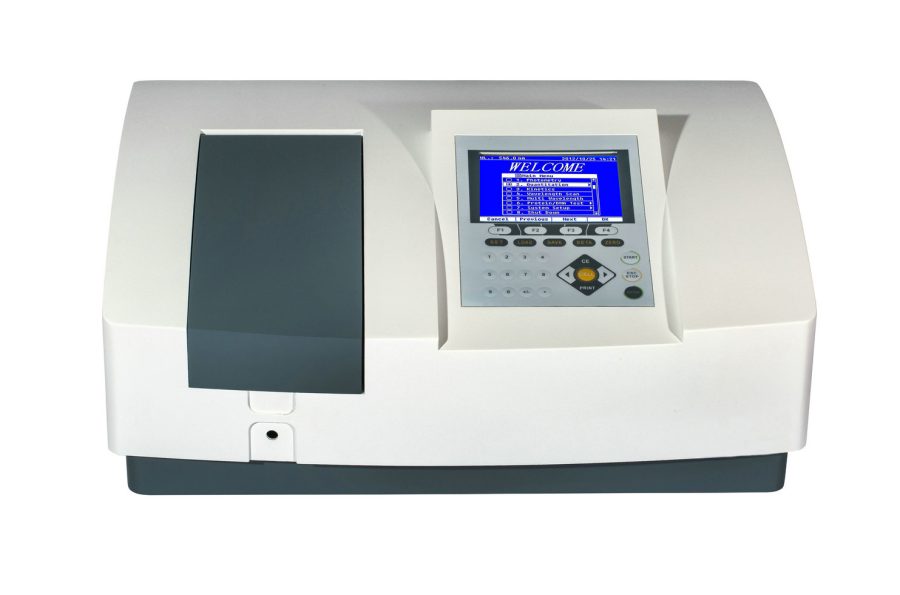
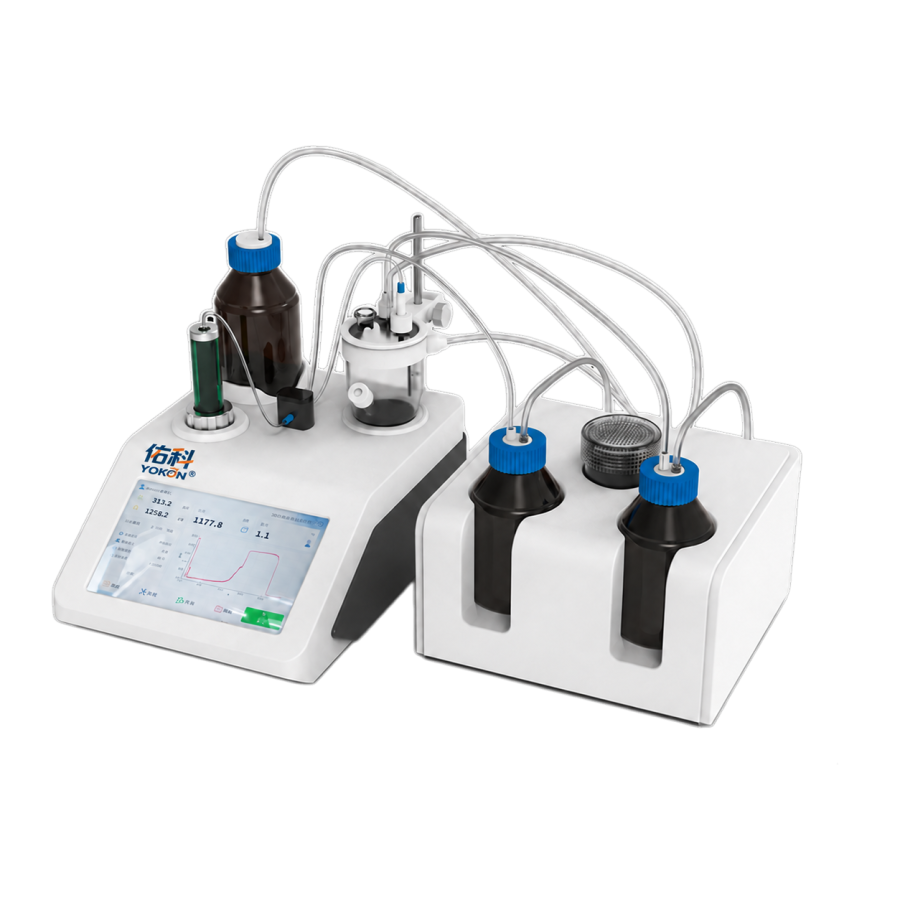
Chromatography rarely stands alone in a chemical laboratory. Purity and colour checks belong on a UV-Vis spectrophotometer, water content on a Karl Fischer titrator or a drying instrument, and identity or purity indicators on a melting point instrument. Grouping them by workflow keeps the sample handling consistent.