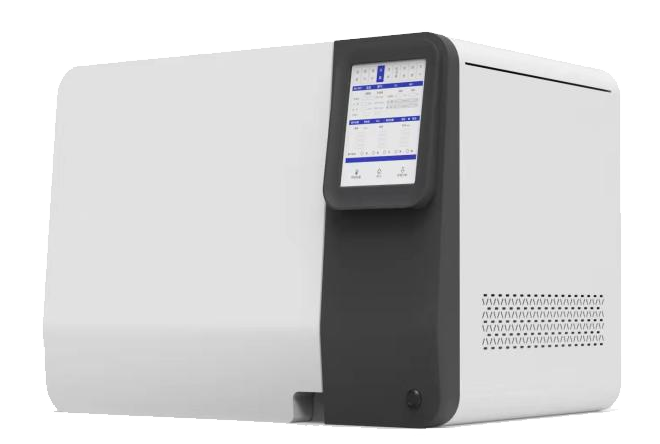
7 models
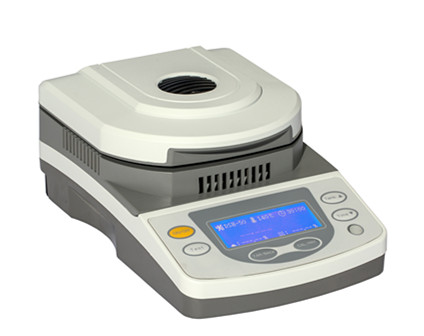
DSH Series Moisture Analyzer
LCD display make operation easy and comfortable in the dark place.
- Minimum Sample Amount
- 0.5g
- Advised Sample Amount
- 3-5g
- Heat up time
- 1-99 minutes, 1 minute interval

Application note · Chemicals & Materials
How to connect a materials sample, its acceptance criteria and the first screening step — and where screening has to stop and a reference method begin.
The short answer
Screening is not analysis. Screening answers one question quickly — does this sample look inside or outside the expected range — and it is allowed to be approximate. The mistake is to build a screening bench that is precise but slow, or to expect a screening result to survive a customer dispute.
Two inputs decide the whole method: the matrix and the acceptance criteria. Both are written down before any instrument is chosen.
“Moisture must be low” is not a criterion. “Moisture below 0.8 percent at release” is. The number, the unit, the sample form and the point in the process where it is measured — those four turn a wish into a method. Without them, every out-of-specification discussion becomes an argument about the method rather than about the material.
Powders, granules, pastes and liquids behave differently in the same instrument. A powder that cakes traps moisture and releases it slowly; a paste that skins over gives a false plateau; a liquid that splashes contaminates the cell. Preparation is where most screening error enters, and it is the part least often written down.
Describe the sample in the procedure: particle size, portion size, whether it is mixed, and whether it is measured as received or after conditioning. A result without that description cannot be compared with a result from another site.
| Question | Technique | Platform |
|---|---|---|
| Is the volatile content inside the limit? | Loss on drying | Moisture analyser with a fixed temperature programme |
| Does the colour match the reference? | Transmittance or platinum-cobalt comparison | Colorimeter with a fixed cell path |
| Does it soften in the expected window? | Capillary melting range | Melting point instrument |
| Is the portion mass what we think it is? | Gravimetry | Analytical balance |
Three situations end the screening stage. The result is disputed. The specification is tight enough that the method’s uncertainty covers the limit. Or the material is new, and no historical range exists to compare against. In all three the answer is a reference method, not a better screening instrument.
A screening method earns its value by being repeatable across operators and shifts, not by being accurate in the absolute sense. Run it on a known sample at the start of each shift, record the value, and treat a drift as information about the instrument rather than about the material.
Sample identity, portion mass, preparation, instrument, programme, result and operator. Five of those six are cheap to record and impossible to reconstruct. A screening record without the portion mass is a number with no meaning, because the result depends on how much material was placed in the pan.
The configuration described above, with the full specification of each model.
7 models
LCD display make operation easy and comfortable in the dark place.
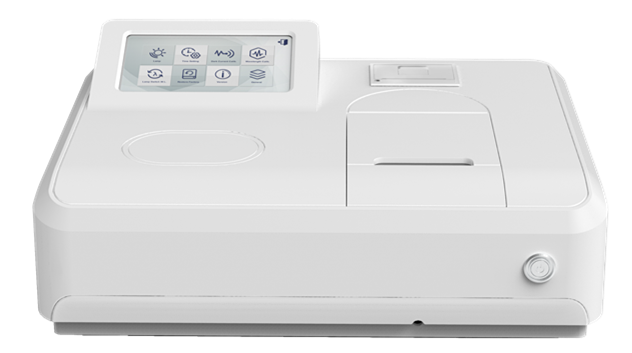
COLORIMETER Series
7 inch high-resolution touchscreen with friendly GUI.
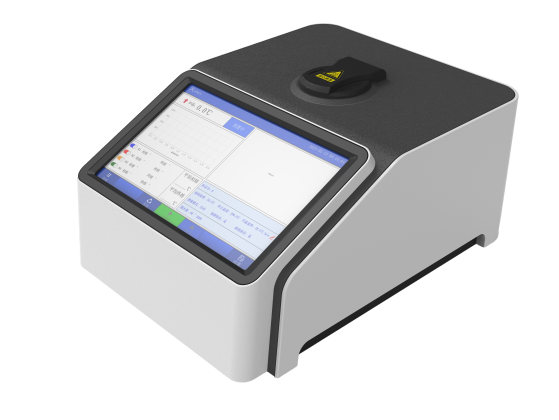
MP-V Series
Video-assisted melting point meter with a 10.1-inch touchscreen
For routine screening and release inside a wide tolerance, yes — provided the programme is fixed per material and verified against the reference method. It cannot replace the reference method where the specification names it, because the two measure slightly different things.
One per batch plus a known control at the start of the shift. The control detects drift in the instrument; the batch sample detects the material. Using the control as the batch result is the most common shortcut and the most expensive one.
Then the method cannot hold the specification, and no amount of instrument precision will fix it. Either widen the tolerance to match the process capability, or move to a method with smaller repeatability — decide which, in writing, before the next batch.
Application note
Column, injector, detector and data: the four decisions that define a gas chromatography configuration for solvent and volatile…
Application note
Four questions that decide whether a volatile or solvent problem needs gas chromatography, what the instrument can and…
Application note
Moisture and colour are the two cheapest release checks in formulated materials, and the two most often performed…
Let’s talk about your application
Send the sample, the concentration range and the reference method. We will confirm the instrument and the accessories.