Application team, Yoke · Reviewed by Technical sales · Updated October 20, 2026 · 3 min read
Food and beverage specifications look varied, but the measurements behind them repeat. A new laboratory can cover most of its routine release testing with five measurements, and add the rest as product-specific methods rather than as instrument purchases.
The five measurements
| Measurement |
What it protects |
Instrument |
Typical method |
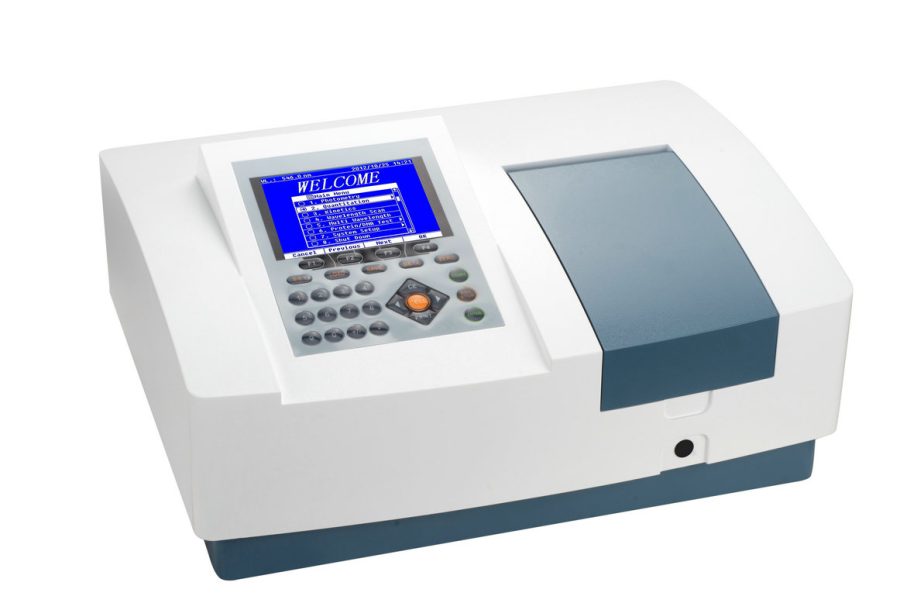
| Colour and absorbance |
Appearance claims and additive levels |
UV-Vis spectrophotometer |
Fixed-wavelength or scanned absorbance |
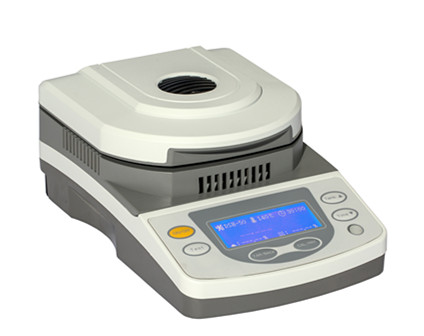
| Moisture |
Composition and shelf-life claims |
Halogen moisture analyser |
Loss on drying to constant mass |
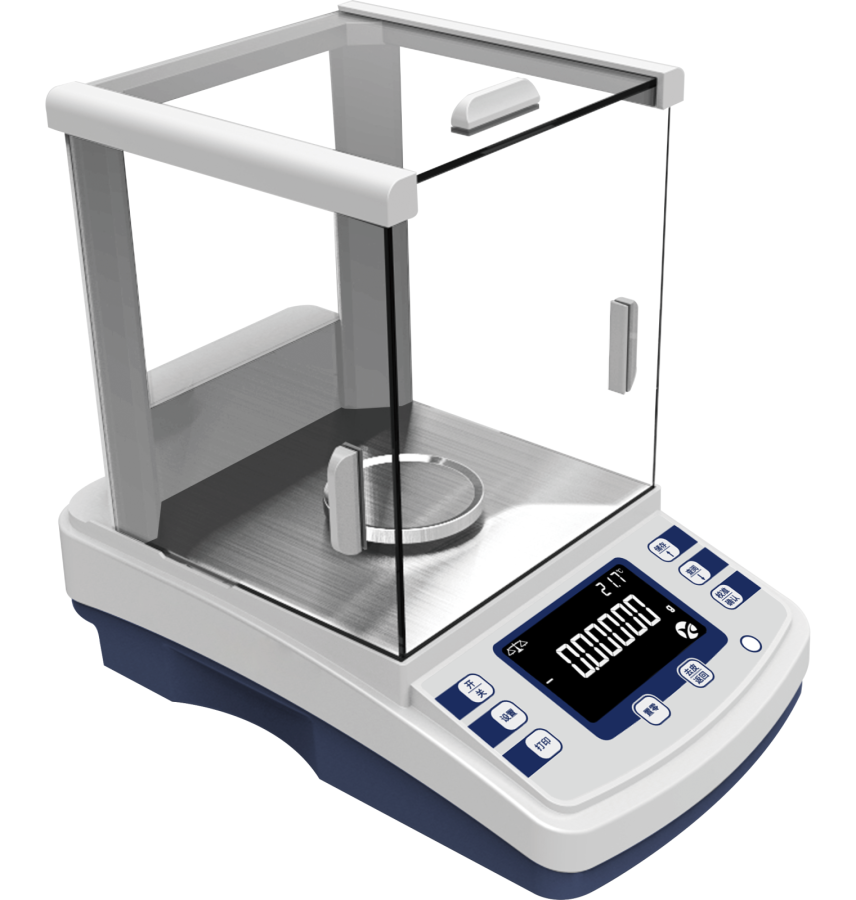
| Sample mass |
Every subsequent calculation |
1 mg balance |
Gravimetric |
| pH and acidity |
Preservation and taste |
pH meter, titrator |
Direct measurement or titration |
| Sodium and potassium |
Declared mineral content |
Flame photometer |
Flame emission |
Sample preparation decides the rest
Two laboratories with identical instruments disagree most often because they prepare the sample differently. Grinding time, subsample size, mixing and the interval between preparation and reading all change the result. Writing those four details into the method does more for repeatability than upgrading the detector.
Moisture is the clearest example. A coarser grind leaves water inside particles that the drying cycle never reaches, so the result reads low and the next laboratory reads high. The instrument is not wrong; the preparation differs.
When a sixth measurement becomes necessary
Three situations justify another instrument. The specification asks for water content rather than loss on drying — Karl Fischer. The declared value includes calcium, magnesium or iron — atomic absorption. The product needs viscosity, sugar content or texture — methods outside this group entirely.
The distinction between loss on drying and water content is the one most often blurred. Drying removes everything volatile, including alcohol and essential oils. In a product that contains them, the drying result is a loss figure, not a water figure, and the two cannot be substituted for each other in a specification.
A practical starting set
- Single-beam spectrophotometer with a wavelength range that covers the colour and additive methods.
- Halogen moisture analyser with a pan size that suits your portion size.
- 1 mg balance, on a stable bench away from draughts and the drying unit.
- pH meter with a spare electrode, because electrodes fail on the busiest day.
- Flame photometer, if sodium or potassium is declared.
What the five do not cover
Protein, fat, fibre, sugar profile and microbiological counts sit outside this group. They are not instrument-selection problems in the same sense: each has its own method tradition and its own consumables. Plan them as separate projects rather than as additions to the same bench.