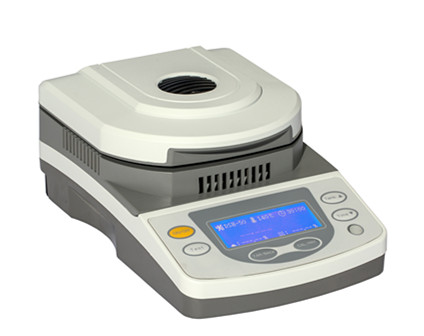
7 models
DSH Series Moisture Analyzer
LCD display make operation easy and comfortable in the dark place.
- Minimum Sample Amount
- 0.5g
- Advised Sample Amount
- 3-5g
- Heat up time
- 1-99 minutes, 1 minute interval

Application note · Food & Beverage
Why homogenisation, portion size and holding time often decide whether a food result transfers between laboratories — and how to describe preparation in the procedure.
The short answer
Food QC results travel badly. A method that works in one laboratory produces a different number in another, and the instrument is rarely the reason. Homogenisation, portion size and the time between preparation and measurement account for most of the difference.
A food sample is not homogeneous. A grain lot, a sauce, a baked product and a beverage each present a different sampling problem, and the portion actually measured is a few grams out of kilograms. The preparation step is what makes that portion representative, and it is the step most often described in one sentence.
Grinding, milling or blending changes particle size, temperature and moisture loss. All three affect the result. The procedure should name the equipment, the duration and the endpoint — a defined particle size, a number of passes, or a visual criterion — rather than “homogenise until uniform”.
Portion size is a compromise between representativeness and what the instrument needs. A moisture analyser wants enough material to fill the pan evenly; a titration wants a portion that lands inside the burette’s useful range. Both need the portion taken from a mixed sample, never from the surface.
| Measurement | Preparation decision | Why it changes the result |
|---|---|---|
| Moisture | Particle size and pan loading | Large particles dry slowly and give a low plateau |
| Moisture | Time between grinding and weighing | Moisture is lost to the air during handling |
| Acidity | Extraction volume and time | Incomplete extraction reports a low value |
| Colour | Filtration or centrifugation | Turbidity adds apparent absorbance |
| Any gravimetric result | Balance check and container dryness | The result is expressed per unit mass |
Moisture migrates, fat separates, acidity changes with microbial activity, and colour darkens. The procedure has to state the maximum time between preparation and measurement, the storage condition in between, and what happens when the limit is exceeded — repeat the preparation, or record a deviation.
Four product types cover most of the practical difficulty. Dry powders and grains need size reduction and a dividing step, because a few grams must represent kilograms. High-fat products need the fat distributed evenly, which usually means grinding carefully enough not to melt it. High-moisture products need mixing rather than grinding, and they lose moisture quickly while being handled. Beverages need degassing and often a dilution before any photometric measurement.
Writing the product type into the procedure is what stops a method borrowed from a similar product from failing quietly on this one.
Three places: the sample left in the mill while the previous one is measured, the portion weighed once and used for two determinations with different requirements, and the container that was not dry. Each produces a result that looks normal and shifts the batch.
Describe preparation in the same detail as the measurement: equipment, duration, portion mass, container, holding time and temperature. The measurement is the visible part; the preparation is what makes it repeatable.
The configuration described above, with the full specification of each model.
7 models
LCD display make operation easy and comfortable in the dark place.
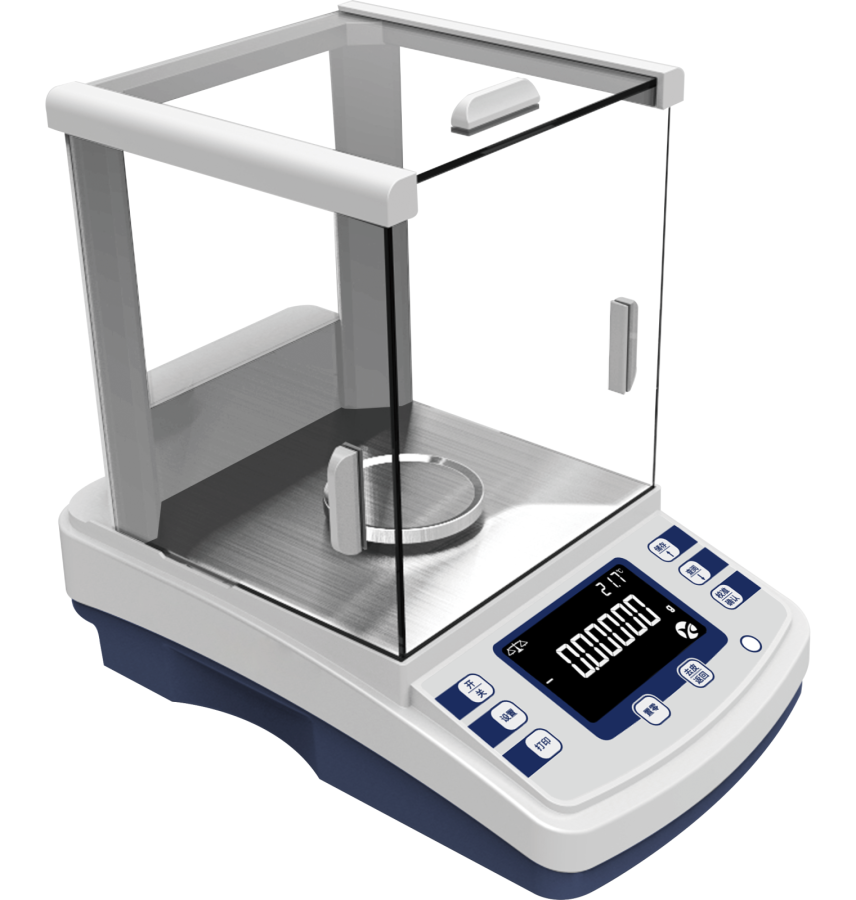
11 models
Supports PC connection.
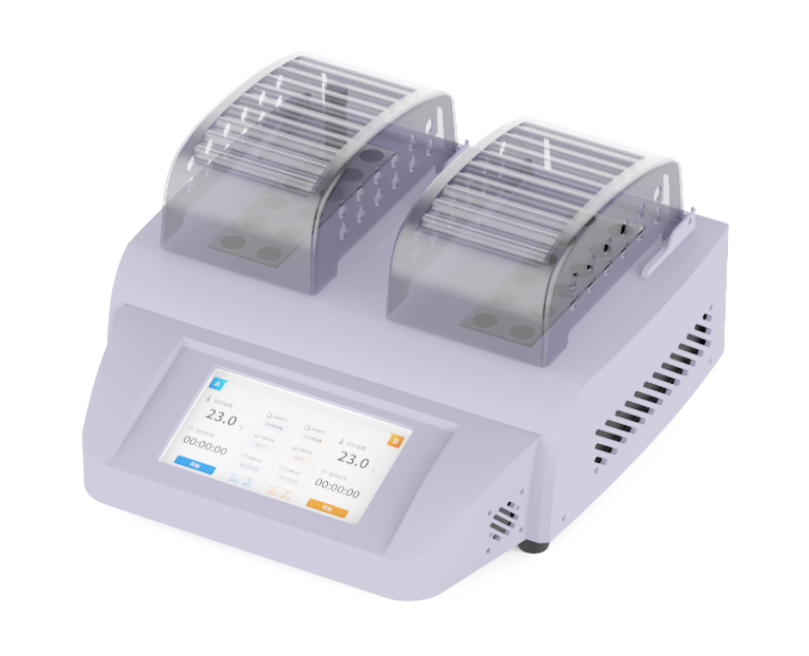
YKJ Series
High-temp plastic casing with aluminum heating block for fast, even heating and energy efficiency
Enough that the portion taken afterwards is representative, and no more than can be processed consistently in one pass. For most products that is a few hundred grams; for a grain lot it is a laboratory sample reduced by a documented dividing step.
Often yes, and it makes the two results easier to compare because they share a mass. It requires the moisture method to leave the material usable — which is not true for every product, so the method has to say.
Measuring a portion from the surface of an unmixed sample. It produces a plausible result that is systematically different from the batch, and it is invisible unless the procedure defines the sub-sampling step.
Application note
The five measurements that cover most food and beverage specifications, the instruments that deliver them, and when a…
Application note
A method-first guide to fixed-wavelength colour tests and routine absorbance work in food QC, including when a colorimeter…
Application note
How weighing, moisture and acidity can be planned as one connected food release workflow — one portion, one…
Let’s talk about your application
Send the sample, the concentration range and the reference method. We will confirm the instrument and the accessories.