Food

Food & Beverage

Routine quality-control instruments for food and beverage laboratories: colour, moisture, sample mass, acidity and sodium.

In short

Most food and beverage specifications are covered by five measurements: colour or absorbance, moisture, sample mass, pH or acidity, and sodium or potassium. A single-beam spectrophotometer, a halogen moisture analyser, a 1 mg balance and a pH meter form the core; a flame photometer is added where sodium or potassium is a declared value.

8
routine measurements
7
instruments in the recommended set
4
application notes

What the laboratory measures.

The routine tasks behind a typical quality programme, the parameters involved and the instrument group that covers them.

Measurement task Parameters / range Typical method Instrument group
Colour and absorbance 0–2 Abs · 340–1000 nm Colorimetry at fixed or scanned wavelengths UV-Vis spectrophotometer
Moisture / loss on drying 0.1–100 % Halogen or infrared drying to constant mass Moisture analyser
Sample and standard weighing 0.001 g Gravimetric 1 mg balance
pH and titratable acidity pH 0–14 · 0.1–20 % acid Direct measurement or titration pH meter / titrator
Sodium and potassium 0.1–100 mg/L in solution Flame photometry Flame photometer
Vitamin and additive absorbance µg/mL to mg/mL Colorimetric or spectrophotometric UV-Vis spectrophotometer
Turbidity and clarity 0–1000 NTU Nephelometry Turbidity meter
Water content in selected matrices 0.01–5 % Volumetric Karl Fischer titration Karl Fischer titrator

Workflow

From sample to reported result.

Most results are decided before the instrument is switched on. These are the steps where laboratories usually lose accuracy.

  1. Write the specification first

    Colour, moisture and acidity mean different things in different product standards.

  2. Fix the sample preparation

    Grinding, mixing and subsampling cause more variation than the instrument does.

  3. Measure inside the calibrated range

    Dilution changes the matrix; record the factor and stay inside the curve.

  4. Check repeatability

    Duplicate preparations, not duplicate readings, show whether the method is under control.

  5. Record the batch conditions

    Moisture and colour drift with temperature and humidity; record them with the result.

Recommended instruments.

Start from a complete configuration rather than a single instrument: the supporting units decide whether the workflow runs without interruption.

All products

Supporting

FP Series Flame Photometer

Sodium and potassium as declared values without an atomic absorption bench.

Element-specific: it does not replace AAS for trace metals.

View

Entry / alternative

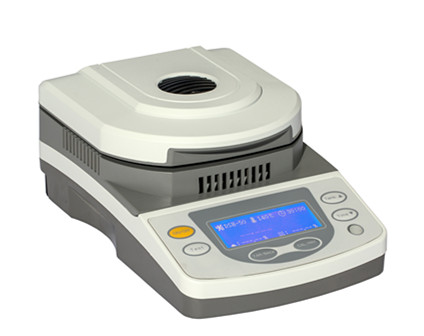
TSF Series Moisture Analyzer

A second moisture analyser for a second product line or a busier shift.

Same principle as the DSH; choose by throughput and pan size.

View

Application notes.

Method detail, common errors and configuration choices, written for this workflow.

All 4 notes

Food and beverage quality control is a repeatability problem before it is a sensitivity problem. Two laboratories with the same instrument get different results mainly because they grind, mix and subsample differently — so the first investment is a documented sample-preparation routine, not a better detector.

The five-measurement core covers a surprising share of declared specifications. Colour and absorbance handle appearance and many additives; moisture handles the most common compositional claim; sample mass underpins every calculation; pH or acidity covers preservation and taste; sodium and potassium cover the mineral declarations on most labels. A laboratory that can do these five reliably can usually add product-specific methods without another bench.

Where the specification talks about water content rather than loss on drying, or the product contains alcohol or volatile oils, the drying method will over-report. That is the point at which a Karl Fischer titrator earns its bench space — not as an upgrade, but as a different measurement.

How to plan the workflow

Food testing starts with the product specification and the way a sample moves through the bench. Record the sampling point, homogenization step, portion size and holding time before comparing instruments.

For an export project, describe the products, declared values, expected batch volume, local standards and report language. The configuration can then combine UV-Vis, moisture, weighing, titration and elemental measurements without leaving sample preparation as an afterthought.

Questions for a global project

  • Does the method measure moisture, water content or total volatile loss?
  • Which accessories and standards are needed for the product matrix?
  • How will results be reviewed and exported between the plant and the central laboratory?
Selection checklist: what to confirm before an inquiry
Sample matrix
Raw materials, intermediates and finished products, including liquids, powders and solid samples.
Target parameters
  • Colour and absorbance
  • Moisture content
  • Sample mass
  • pH and conductivity
Method and conditions
The method depends on the product and the quality-control plan. Confirm the reference method, sample preparation and acceptance criteria for each product line.
Suggested configuration
UV-Vis for absorbance and colour work, a moisture analyser for loss-on-drying, a balance for sample preparation, and a pH meter where acidity is part of the specification.
Limitations
Loss-on-drying is not suitable for every matrix. Confirm the reference method and the repeatability your specification requires.

Questions we are asked about this workflow.

Short answers; send the details of your method for a definite reply.

Loss on drying or Karl Fischer?

Loss on drying measures everything that evaporates; Karl Fischer measures water. If the specification states water content, or the matrix contains alcohol or volatile oils, use Karl Fischer.

Do I need a double-beam spectrophotometer?

Only when the protocol requires reference-beam stability over long runs, or the laboratory runs unattended sequences. Routine colour and absorbance work is well served by single beam.

Why a 1 mg balance rather than 0.1 mg?

Cost and stability. 1 mg covers sample and standard preparation for most methods; 0.1 mg is for reference standards and small weighed portions.

Can the same spectrophotometer measure colour and vitamins?

Yes, if the wavelength range covers both. Colour work often sits at fixed wavelengths, while vitamin assays usually need a scan and a calibration curve.

Is a flame photometer enough for minerals?

For sodium and potassium, yes. Calcium, magnesium, iron and trace metals need atomic absorption or another elemental technique.

Let’s talk about your application

Discuss this application with our team.

Send your matrix, target parameters and reference method for a configuration review.

Contact our team