Application team, Yoke · Reviewed by Technical sales · Updated October 20, 2026 · 3 min read
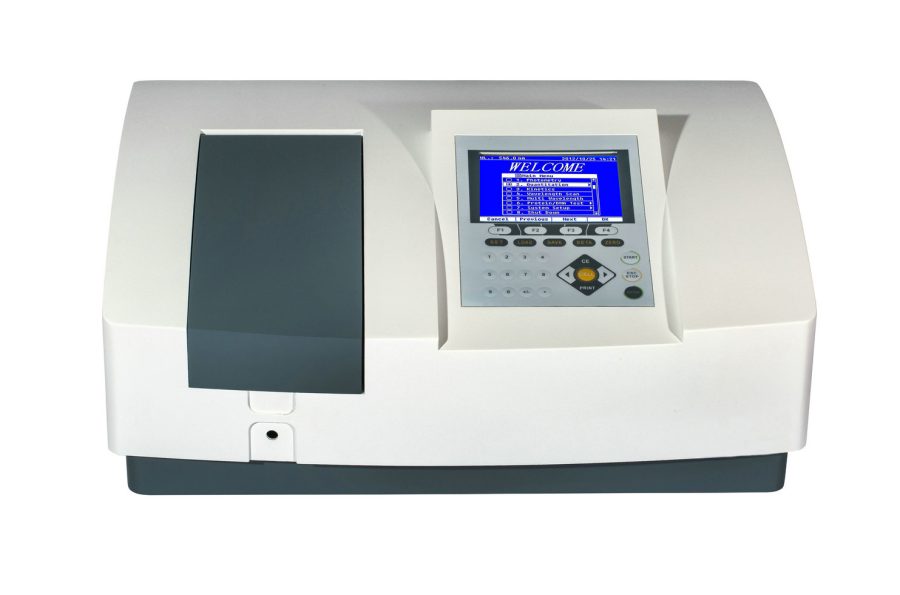
A UV-Vis spectrophotometer is one of the simplest instruments in a pharmaceutical QC laboratory and one of the easiest to specify badly. The failure mode is rarely a wrong optical layout; it is a configuration that cannot support the method, or a documentation package that arrives after the validation plan was written.
The method comes first
Write down four numbers before looking at a catalogue: the assay wavelength, the path length, the standard concentration range and the acceptance criteria. Everything else — bandwidth, stray light, baseline flatness, cell changer — is either necessary or unnecessary relative to those four numbers.
A second useful question: how long does one analytical sequence run? An assay that takes ten minutes and is re-blanked each time has different stability requirements from a sequence that runs for four hours unattended.
Optical performance that actually matters
| Specification |
Why it matters |
How it is checked |
| Wavelength accuracy |
The absorbance must be read at the method wavelength |
Reference filters or a standard solution |
| Photometric accuracy |
The calibration curve assumes a true absorbance value |
Reference materials at defined absorbance |
| Stray light |
Limits the upper absorbance range and the linearity |
Cut-off filter or standard solution |
| Baseline stability |
Drift between blank and sample reads as concentration |
Repeated blank readings over the sequence length |
Single beam or double beam
Double beam splits the light between a reference and the sample, so the instrument corrects for lamp drift and detector change while the sequence runs. Single beam measures them one after the other and relies on re-blanking. Neither is more accurate in a short measurement; the difference appears when the sequence is long or unattended.
The balance sets the uncertainty
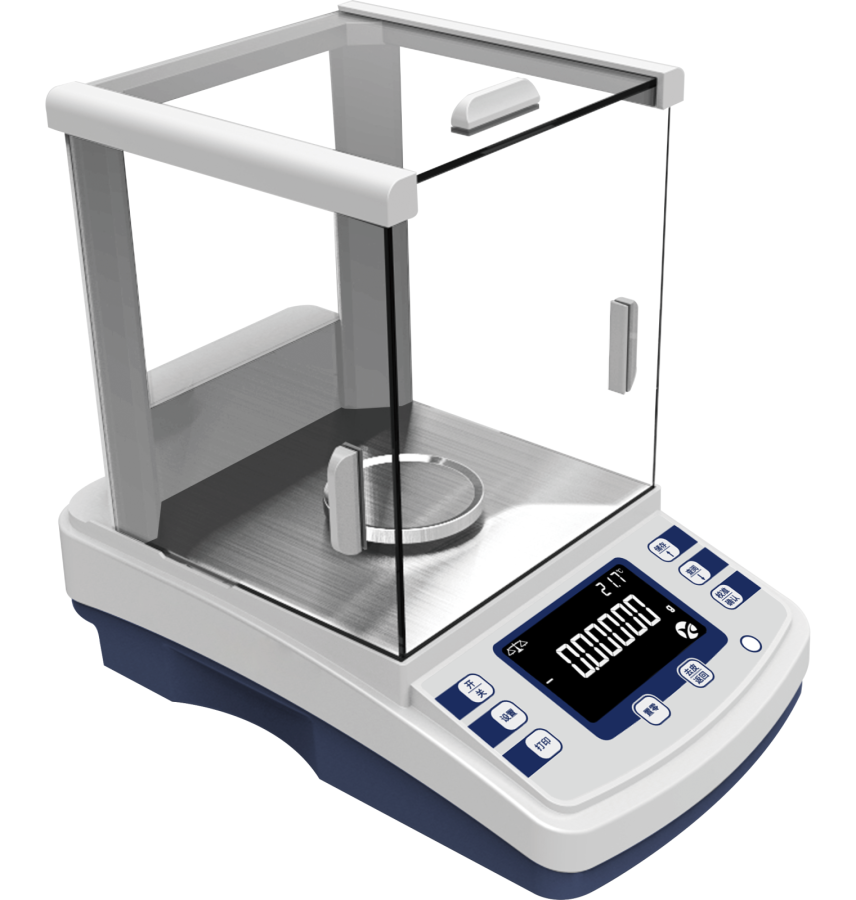
Assay calculations start from the mass of the standard. If that mass is small, readability and bench stability become the dominant uncertainty, not the spectrophotometer. This is why the 0.01 mg balance is part of the assay configuration rather than a separate purchase: it decides the minimum sample weight the method can support.
Readability is not the same as performance. A 0.01 mg balance on a bench near a door, a centrifuge or an air-handling grille will not deliver 0.01 mg repeatably, no matter what the certificate says.
Moisture, if the method includes it
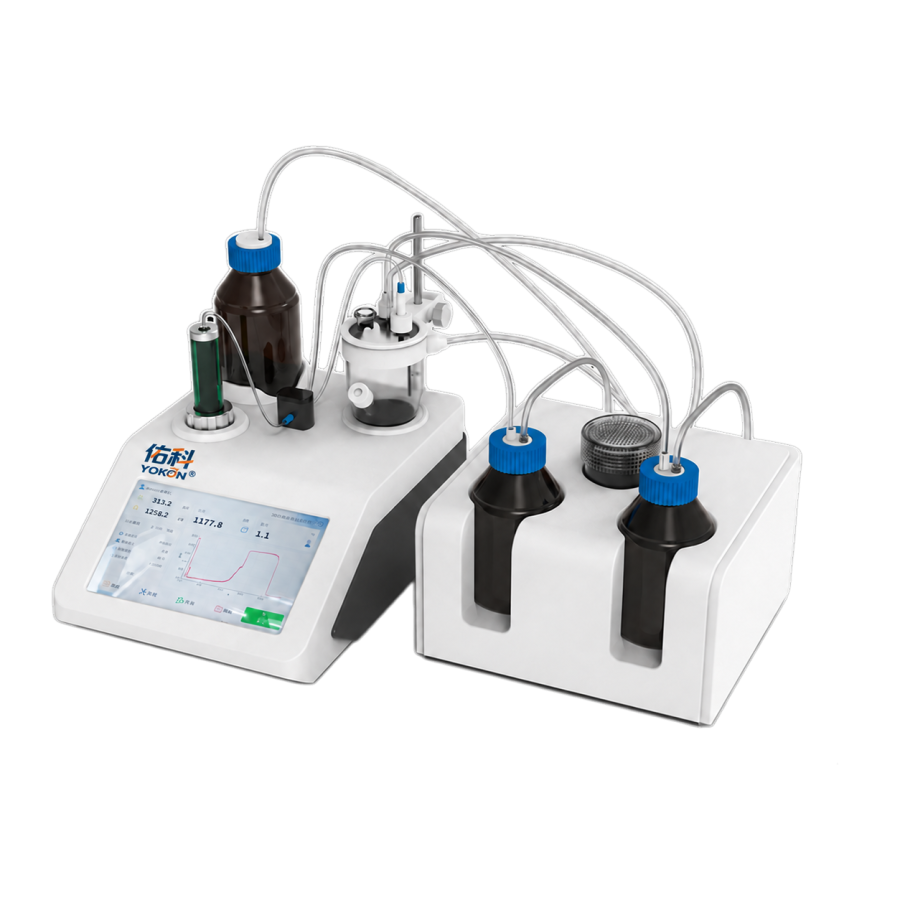
Loss on drying and Karl Fischer answer different questions. Where the specification states water content, or the material contains volatile solvents, drying over-reports and the method will not transfer between laboratories. The Karl Fischer titrator belongs in the same configuration discussion because it shares the balance and the standard-preparation routine.
Documentation and data
Agree the qualification package, the calibration certificates and the data export format in writing before the order. The content differs by product and by software version, and retrofitting a documentation package after installation is far more expensive than specifying it up front.
What to leave out
Accessories that no method uses are the most common waste in a QC purchase: a cell changer for a laboratory that measures one sample at a time, a scanning package for a fixed-wavelength assay, a second software licence for an instrument with one operator. Start from the method, and add only what a written procedure requires.