Industry

Industrial Water

Instrument selection for boiler feed, cooling water, process water and effluent in industrial plants.

In short

Industrial water control is a titration and electrochemistry problem before it is a spectroscopy problem: hardness, alkalinity, chloride, pH, conductivity and dissolved oxygen cover most operating limits. Ion chromatography and atomic absorption are added when the programme tracks individual ions or corrosion metals, and a laboratory COD analyser covers the discharge permit.

10
routine measurements
7
instruments in the recommended set
4
application notes

What the laboratory measures.

The routine tasks behind a typical quality programme, the parameters involved and the instrument group that covers them.

Measurement task Parameters / range Typical method Instrument group
Total and calcium hardness 1–500 mg/L as CaCO₃ Complexometric titration Potentiometric titrator
Alkalinity (P and M) 10–500 mg/L Acid titration to fixed endpoints Potentiometric titrator
Chloride 5–500 mg/L Argentometric titration Potentiometric titrator
pH and conductivity pH 0–14 · 0–200 mS/cm Direct immersion pH / conductivity meters
Dissolved oxygen 0–20 mg/L Electrochemical or optical DO meter
Turbidity / suspended solids indicator 0–1000 NTU Nephelometry Turbidity meter
Phosphate and silica for treatment control 0.01–20 mg/L Colorimetric Spectrophotometer
Iron and copper as corrosion indicators 0.01–5 mg/L Colorimetric or flame AAS Spectrophotometer / AAS
Anions in make-up water 0.01–100 mg/L Ion chromatography Ion chromatograph
Effluent COD 10–1500 mg/L Digestion and colorimetry Digestion block + colorimeter

Workflow

From sample to reported result.

Most results are decided before the instrument is switched on. These are the steps where laboratories usually lose accuracy.

  1. Agree the control limits

    The treatment programme, not the catalogue, defines the ranges and the alarm levels.

  2. Choose the sampling points

    A sample taken downstream of dosing answers a different question from one taken at the feed.

  3. Match the method to the limit

    A 5 mg/L chloride limit and a 500 mg/L limit rarely need the same technique.

  4. Log and trend the results

    A single result is a data point. The trend is what the plant acts on.

  5. Reconcile with online readings

    Laboratory and online values diverge for reasons worth understanding, not for reasons worth hiding.

Recommended instruments.

Start from a complete configuration rather than a single instrument: the supporting units decide whether the workflow runs without interruption.

All products

Supporting

IC hope 1800 Ion Chromatograph

Anion tracking in make-up and boiler water where several ions must be separated.

Overkill if the programme only needs chloride by titration.

View

Supporting

COD Analyzer B-COD

Effluent COD for the discharge permit, using the same digestion workflow as a municipal laboratory.

Chloride-rich effluent needs the appropriate reagent set and dilution.

View

Application notes.

Method detail, common errors and configuration choices, written for this workflow.

All 4 notes

Industrial water laboratories are judged by uptime, not by detection limits. The measurements that protect a boiler or a cooling circuit are the ones taken every shift, by an operator who has other duties — and that fact should drive the instrument choice more than the specification table does.

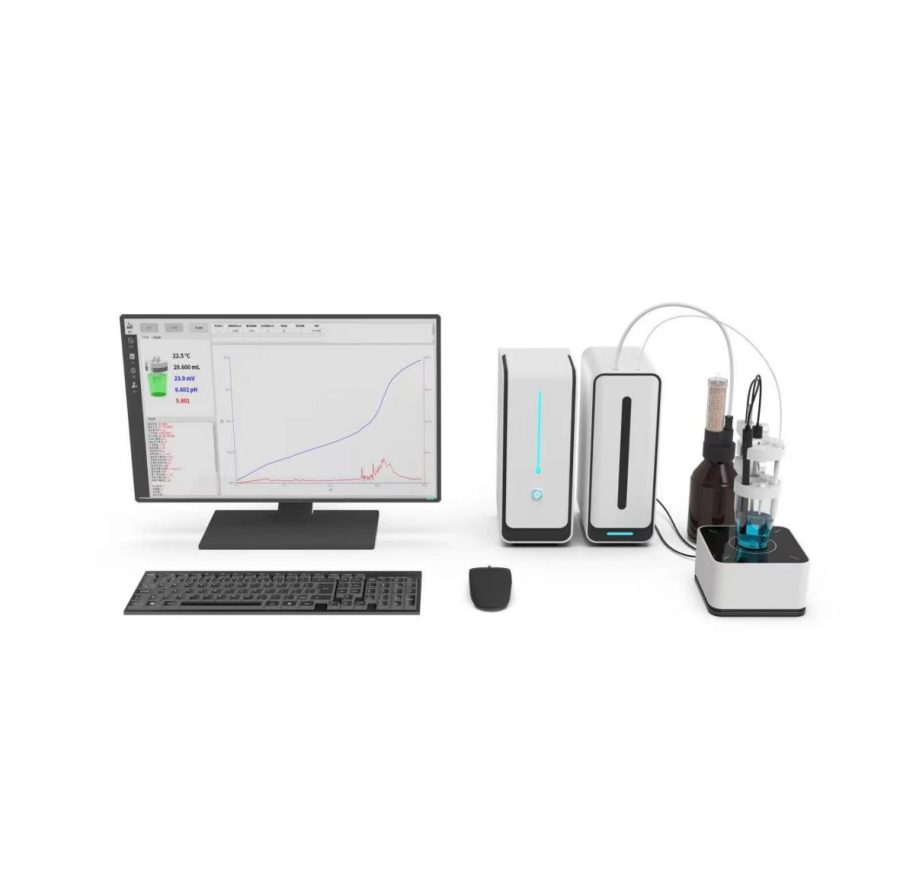
Titration with an electrochemical endpoint is the workhorse. Hardness, alkalinity and chloride are all volumetric methods, and moving the endpoint decision from a colour change to an electrode removes both the eyesight variable and the argument about the last drop. One titrator with stored methods usually covers a plant that also measures pH and conductivity.

Where the laboratory and the plant disagree, the useful question is not which number is right but what the two measurements represent. Online conductivity tracks a flowing stream at temperature; the laboratory sample is a cooled, transported aliquot. Documenting that difference in the method is worth more than another decimal place on the certificate.

How to plan the workflow

Industrial water laboratories support a control loop, so online readings and laboratory verification should be designed together. Define sampling points, temperature, preservation, target parameters, reporting limits and the time from sample collection to result.

The quotation should show how electrochemistry, titration, spectroscopy, ion chromatography and elemental analysis fit the plant workload. It should also state the local installation, training and maintenance route.

Questions for a global project

  • Which results control the process and which results prove compliance?
  • Where do online and laboratory samples differ in temperature or preparation?
  • Which reference checks, spare electrodes and standards should be included?
Selection checklist: what to confirm before an inquiry
Sample matrix
Boiler feed water, cooling water, process water and effluent.
Target parameters
  • pH and conductivity
  • Dissolved oxygen
  • Anions and hardness indicators
  • Trace metals
Method and conditions
Operating limits come from your water-treatment programme. Confirm the control ranges, alarm limits and the sampling points before selecting instruments.
Suggested configuration
Benchtop or portable meters for pH, conductivity and dissolved oxygen; ion chromatography for anions; atomic absorption for trace metals.
Limitations
Online and laboratory measurements answer different questions. Define whether you need continuous control, periodic verification or both.

Questions we are asked about this workflow.

Short answers; send the details of your method for a definite reply.

Why do laboratory and online conductivity readings disagree?

Online sensors sit in flowing water at plant temperature; laboratory samples cool, degas and can pick up contamination on the way. Compare at the same temperature and with the same cell constant before treating either value as the reference.

Can one titrator cover hardness, alkalinity and chloride?

Yes. All three are volumetric methods; what changes is the reagent, the electrode and the calculation. A potentiometric titrator stores each one as a program.

Do I need an ion chromatograph for boiler water?

Only if the programme separates several anions. For chloride and alkalinity alone, titration is faster and needs less infrastructure.

How often should meters be calibrated?

Follow the plant procedure or the method you report against. In practice, a daily check with fresh buffers costs minutes and catches the failures that cost days.

Where do phosphate and silica fit?

Both are colorimetric and belong on a spectrophotometer. They are treatment-control measurements, so the reading frequency follows the dosing schedule.

Let’s talk about your application

Discuss this application with our team.

Send your matrix, target parameters and reference method for a configuration review.

Contact our team