Yoke Application Team · Reviewed by Yoke Application Team · Updated October 22, 2026 · 3 min read
The same instrument serves two very different jobs. In a teaching laboratory it demonstrates a principle on a sample chosen to behave. In a research group it answers a question on a sample chosen by the question. The instrument may be identical; the work around it is not, and that gap is where new groups lose time.
The same instrument, a different job
A practical is designed so that the answer is known. A research measurement is designed so that the answer is not. That single difference changes everything downstream: the calibration has to be validated rather than demonstrated, the sample has to be characterised rather than assumed, and the uncertainty has to be estimated rather than implied.
What changes when the question becomes research
Four things. The detection limit has to be established for the actual matrix. The precision has to be measured, not assumed from the instrument specification. Interferences have to be tested rather than avoided by choosing a clean sample. And the method has to be written down well enough for someone else to repeat it.
Method development in six steps
| Step |
Question answered |
Evidence produced |
| Define the measurand |
What exactly is reported, in what unit, in what form? |
A written definition |
| Choose the condition |
Where is the response selective and stable? |
A spectrum or response curve |
| Establish the range |
Over what concentration is the response usable? |
A calibration across the intended range |
| Test the matrix |
Does the sample change the response? |
Spike recovery in the real matrix |
| Estimate uncertainty |
How large is the scatter, and where does it come from? |
Replicates, blanks, repeat measurements |
| Write the procedure |
Can another person repeat it? |
A procedure a colleague can follow unaided |
The gap: detection limit, precision, validation
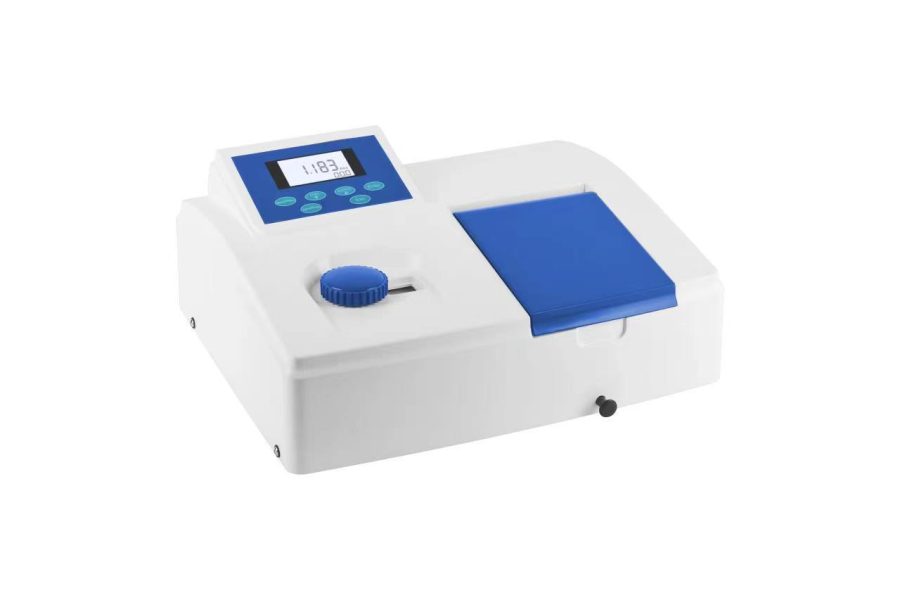
A teaching instrument is usually specified well enough to demonstrate absorption; a research method needs to know how small a difference it can believe. Those are different numbers. Calculating a detection limit from replicate blanks, measuring repeatability on a real sample and testing recovery in the matrix takes a few days and settles most arguments about whether a result is real.
Planning the upgrade path
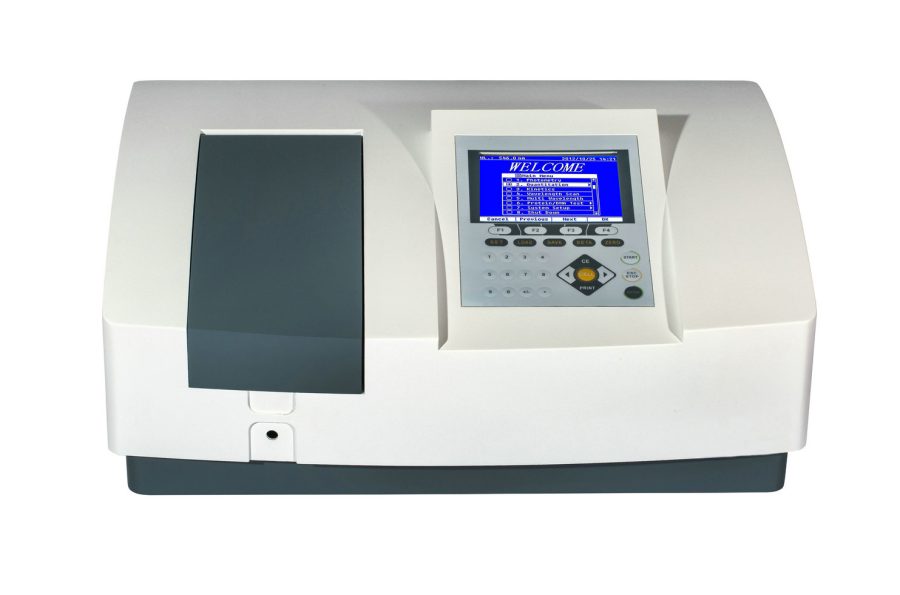
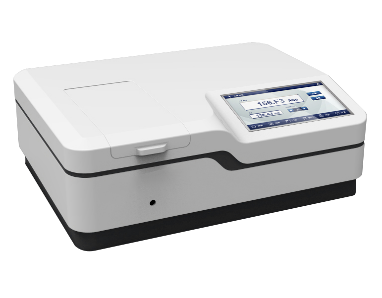
A group that starts with a basic single-beam instrument and grows into method development usually needs three things next: better wavelength accuracy, a stable baseline for long measurements, and software that exports raw data. A double-beam platform addresses the second; the third is a software question that should be asked before the purchase, not after.
A note on documentation
The method file is the deliverable. A group that develops a good method and does not write it down has produced a result, not a capability. Write the procedure while the work is fresh, in the form a new student could follow, and keep the raw data with it.