Yoke Application Team · Reviewed by Yoke Application Team · Updated October 22, 2026 · 3 min read
A teaching experiment succeeds when a student who has never seen the instrument can repeat it next term, on a different instrument, and get a number that means the same thing. That is a higher bar than “the practical worked”, and it changes how the experiment is designed.
What transferable means
Transferable means the written procedure carries the measurement rather than the instrument’s menu. A student who has learned “press this, then that” has learned the menu. A student who has learned why the blank is measured, why the cell path matters and why the wavelength is fixed has learned the measurement, and can repeat it on any spectrophotometer in the building.
Design around the wavelength, not the menu
Start from the absorption maximum of the species being measured and the concentration range the practical uses. Those two decide the cell path and the dilution. Write them into the procedure as numbers with units, so that a change of instrument does not change the experiment.
Sample handling is the lesson
Most of what a student learns in a UV-Vis practical is not about optics. It is about the cell: filling it without bubbles, handling it by the frosted faces, wiping it consistently, and understanding that a fingerprint on the optical face is a result. Build time for that into the session; it is the part that transfers to every later method.
Calibration curve discipline
| Step |
Typical student error |
What it teaches |
| Prepare standards |
Flasks filled to the wrong mark, or not mixed |
Every later result inherits this error |
| Zero the instrument |
Blank measured in a different cell from the samples |
The blank is part of the measurement, not a formality |
| Read the standards |
Reading in ascending order without re-blanking |
Drift is real and has to be controlled |
| Fit the curve |
Forcing the line through zero |
The intercept carries information about the blank |
| Read the sample |
Extrapolating beyond the top standard |
The calibration defines the valid range |
Export and assessment
If the practical is assessed from a printout, the student learns to produce a printout. If it is assessed from a table of raw absorbance values with the calibration parameters, the student learns to defend a result. Ask for the raw data, the curve, the correlation and the calculated concentration, and mark the reasoning rather than the final number.
Choosing for a class of thirty
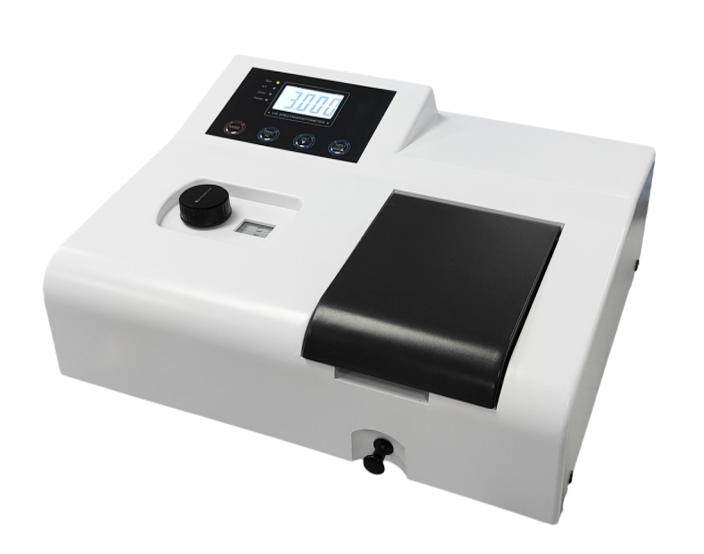
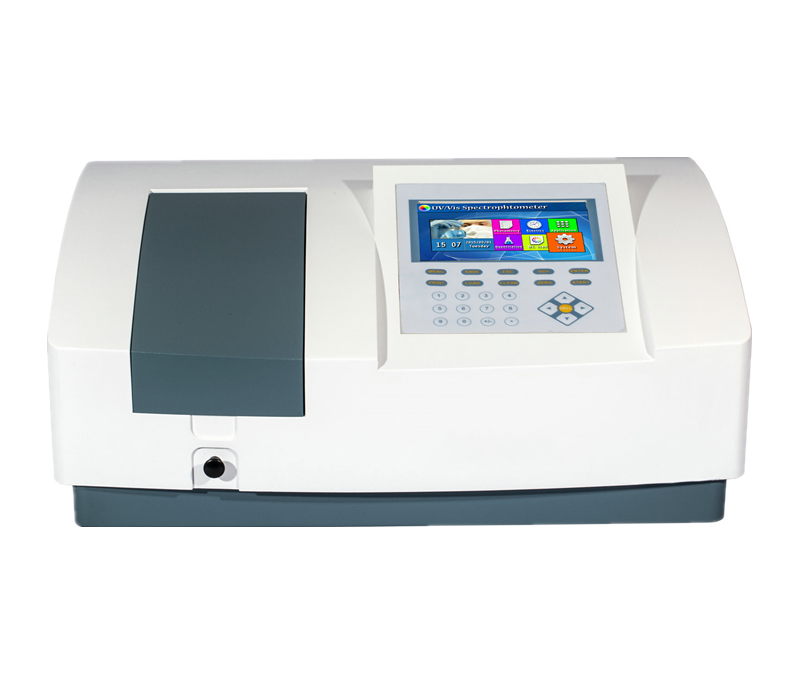
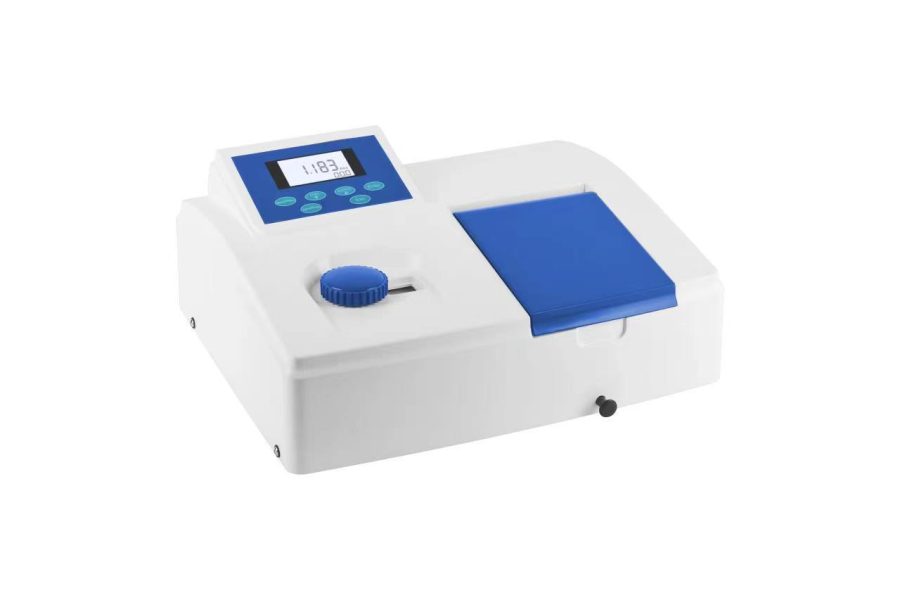
Three requirements dominate: the instrument must survive being operated by students, the wavelength range must cover the dyes and reagents the practical uses, and the software must be simple enough that the session is spent on chemistry. A basic single-beam instrument covers most teaching work; a scanning double-beam platform is a research instrument that a teaching laboratory rarely needs.