Application team, Yoke · Reviewed by Technical sales · Updated October 20, 2026 · 3 min read
Industrial water treatment runs on a control loop: dose, measure, correct. Most of the measuring is done online, and the laboratory exists to verify that the loop is telling the truth. That division of labour decides which instruments belong on the bench.
Laboratory or online?
Online instruments are continuous, located at the process and expensive to calibrate. Laboratory instruments are discrete, located at the bench and cheap per result. Neither replaces the other: the online sensor sees every minute of the process and none of the sample preparation, while the laboratory sees a representative aliquot prepared to a defined method.
When the two disagree, the useful question is what each is measuring. A conductivity value taken at 60 °C in flowing water is not the same quantity as a cooled laboratory aliquot, even when both instruments are calibrated.
The titration bench
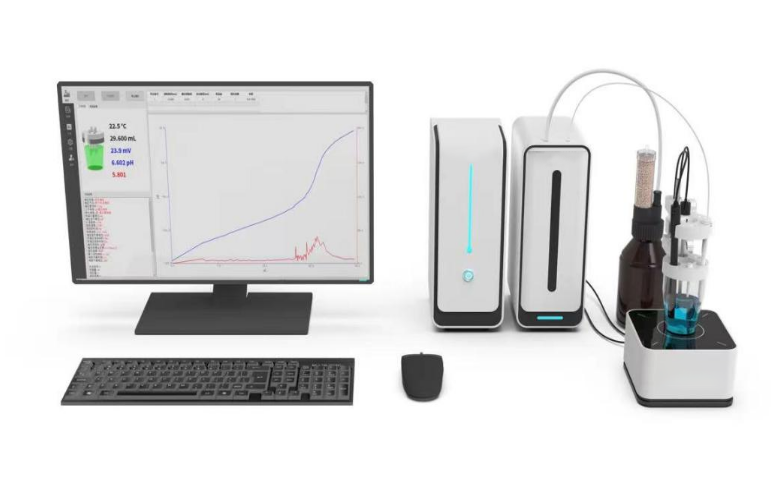
Hardness, alkalinity and chloride are volumetric methods and account for most of the routine workload. Moving the endpoint from a colour change to an electrode makes the test repeatable between operators, which matters more in a plant laboratory with shift cover than in a research laboratory with one specialist.
| Test |
Reagent |
Endpoint |
Typical range |
| Total hardness |
Complexometric |
Potentiometric, indicator electrode |
1–500 mg/L as CaCO₃ |
| Alkalinity (P and M) |
Acid titrant |
Fixed pH endpoints |
10–500 mg/L |
| Chloride |
Silver nitrate |
Potentiometric, silver electrode |
5–500 mg/L |
Electrochemistry on the same bench
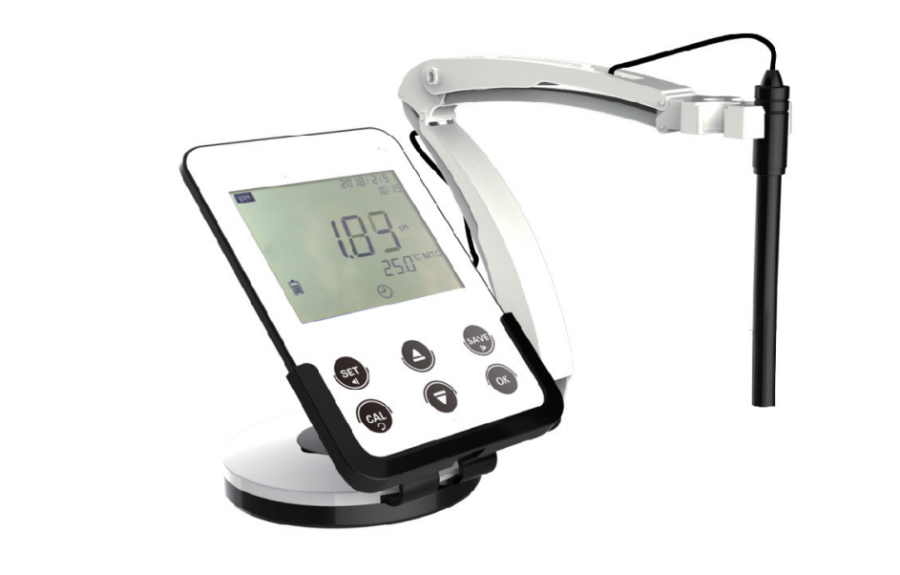
pH, conductivity and dissolved oxygen belong beside the titrator because they use the same sample and the same shift routine. A multi-parameter benchtop meter covers all three; a portable meter is added when the operator walks the plant, and the two must be cross-checked so their values agree.
Corrosion indicators
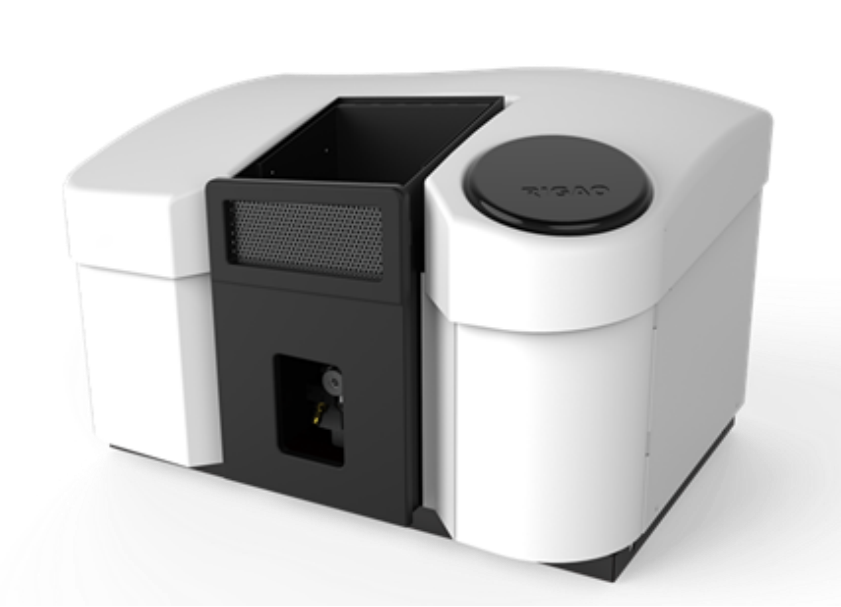
Iron, copper and occasionally zinc are the practical indicators that a treatment programme is not holding. At mg/L levels, flame atomic absorption is the simplest reliable route; at lower levels a colorimetric method may be adequate and cheaper. Which one to use depends on the limit in the treatment programme, not on the instrument catalogue.
Effluent and discharge
Discharge permits usually specify COD rather than a treatment parameter, and the sample matrix is the hardest one the laboratory sees. A digestion block sized for the peak load, plus a reader suited to the concentration range, is the minimum. Chloride-rich effluent needs the appropriate reagent set, or the result will be high for the wrong reason.
Making the two datasets agree
- Compare at the same temperature, or apply the temperature compensation the method specifies.
- Check the cell constant and the calibration record of both instruments.
- Take the laboratory sample at the same point as the online sensor, not downstream of it.
- Record the comparison, not just the conclusion. The trend is the evidence.