Yoke Application Team · Reviewed by Yoke Application Team · Updated October 22, 2026 · 3 min read
Cooling and boiler systems are controlled by a small number of measurements taken often, at points that are easy to get wrong. The chemistry is not complicated. The difficulty is that the sample changes between the system and the bench: it cools, it degasses, it deposits, and it picks up contamination from the sample line.
Control limits first
The treatment programme defines the limits: cycles of concentration, alkalinity, hardness, chloride, pH and dissolved oxygen in the feed. Write those limits down before choosing instruments, because the limit and its tolerance decide whether a titration, a meter or a separation method is appropriate — and how much precision the method actually needs.
The measurement set
| Parameter |
What it controls |
Typical method |
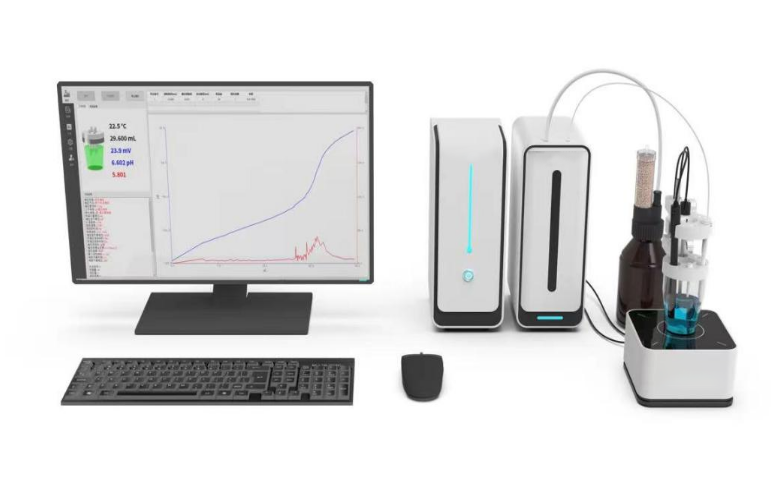
Sample handling |
| pH |
Corrosion and scale tendency |
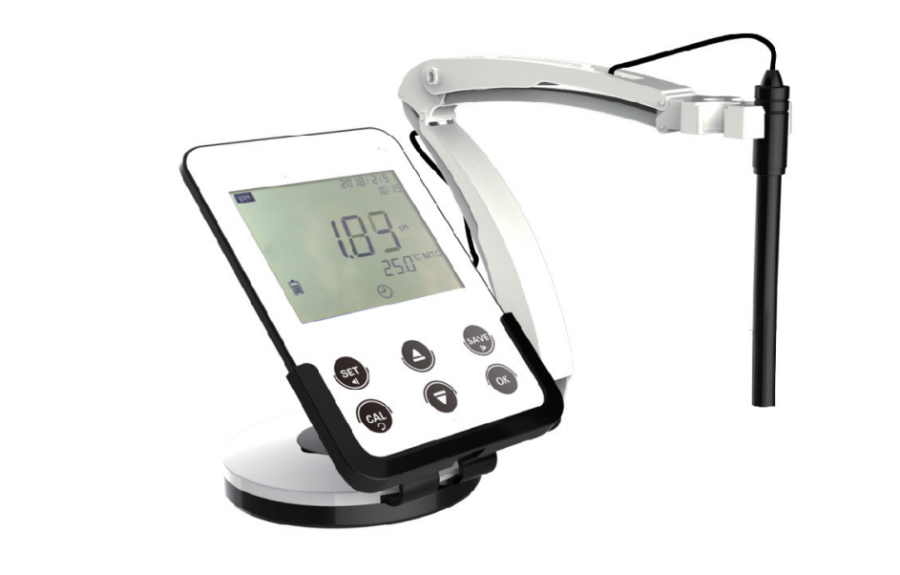
Benchtop meter, temperature compensated |
Measure at once; do not aerate |
| Conductivity |
Cycles of concentration |
Benchtop meter |
Cool to a fixed temperature before reading |
| Total hardness |
Scale formation |
Complexometric titration |
Cool quickly; titrate before precipitation |
| Alkalinity |
pH stability and treatment dose |
Acid titration to a fixed endpoint |
Titrate promptly; limit air exposure |
| Chloride |
Corrosion risk |
Titration, or ion chromatography at low levels |
Filter if turbid; record the dilution |
| Dissolved oxygen |
Feed-water corrosion |
Meter with a flow cell where possible |
No air contact; measure in a closed cell |
Sampling points and cooling
Three rules carry most of the value. Sample from a point that represents the system rather than a dead leg. Cool the sample in a closed coil rather than an open beaker, because an open beaker loses dissolved gases and gains oxygen. Flush the line long enough that the sample is the system’s water rather than the line’s water.
None of these requires an instrument, and all three change the number that the instrument reports.
Titration or separation for chloride
Titration is fast and adequate for mg/L levels in most cooling water. Ion chromatography becomes the better choice when the level is low, when several ions are reported together, or when the sample is coloured enough to obscure the endpoint. The decision is about the level and the report, not about precision in the abstract.
Frequency follows risk
A system under stable control can be checked on a fixed schedule. A system that has just been cleaned, restarted or put on a new treatment needs daily checks until the trend settles. Write the schedule as a rule rather than a table: what triggers an increase in frequency, and who decides.
Common failures
Three appear most often: hardness measured on a sample that cooled slowly and precipitated, conductivity read at whatever temperature the sample happened to be, and dissolved oxygen measured by pouring sample into an open beaker. Each produces a number that looks reasonable and is wrong, which is the most expensive kind of error a water programme can make.