COD Series
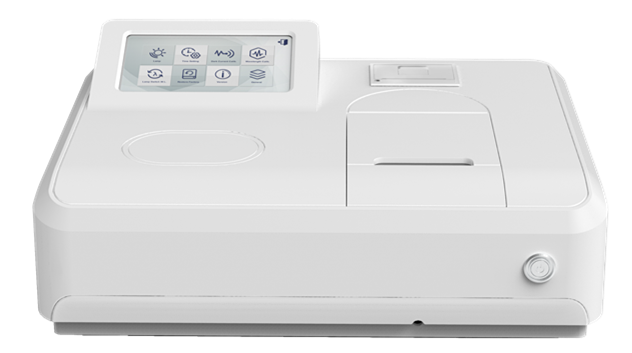
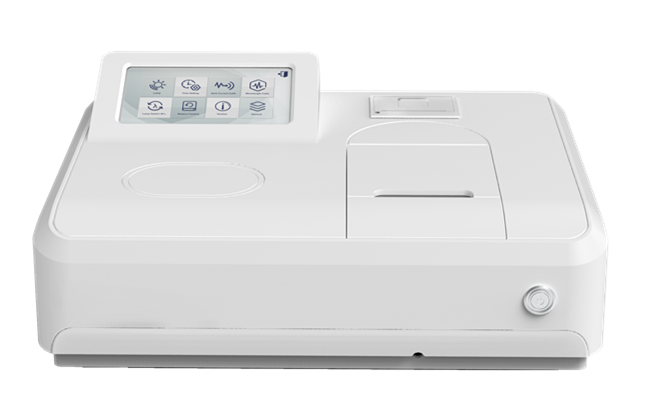
COD Analyzer B-COD
7 inch high-resolution touchscreen with friendly GUI.
- Measurement Method
- Fast digestion spectrophotometry
- Measuring Range
- 10-10000mg/L
- Accuracy
- ≤5%

Application note · Water & Environment
How surface water, groundwater and wastewater change preparation, calibration and quality control — and where matrix effects are compensated in the workflow.
The short answer
Environmental water is the category where a method that worked on the bench fails in the field, and the reason is usually the matrix rather than the instrument. Surface water carries suspended solids and organic load, groundwater carries hardness and dissolved solids, wastewater carries everything at once, including the interference the method was not designed for.
Matrix effects are not a defect to be eliminated. They are a property of the sample that has to be measured, documented and compensated. The practical question is where in the workflow the compensation happens: in preparation, in calibration, or in the interpretation of the result.
The three sample types that dominate environmental work fail in different places, which means a single procedure applied to all three will hide whichever failure it was not written for.
| Matrix | Dominant interference | Where it shows up | First response |
|---|---|---|---|
| Surface water | Suspended solids, colour, organic matter | Turbidity bias, drifting absorbance baseline | Documented filtration, blank correction |
| Groundwater | Hardness, dissolved solids, sulfide and iron | Scaling on electrodes, suppressed signal, precipitation | Preservation, dilution, matrix-matched standards |
| Wastewater | High organic load, chlorine, surfactants, particles | Poor digestion recovery, foaming, colour interference | Spike recovery check, larger dilution, alternative wavelength |
Two strategies cover most environmental work. Matrix-matched calibration prepares standards in a solution that resembles the sample, and works when the matrix is stable and known. Standard addition adds the analyte to the sample itself, and works when the matrix cannot be reproduced — which is the normal case for wastewater.
Standard addition costs more work per batch and cannot be applied to every sample. A workable compromise is matrix-matched calibration for the routine batch, with standard addition on the first sample of a new source and on any sample whose spike falls outside the acceptance window.
Dilution is often treated as a convenience. In environmental work it is a step that changes the result, because it dilutes the interference unevenly and moves the sample down the calibration curve. Record the dilution factor with the result, verify it with a spiked dilution, and never report a diluted result to more significant figures than the dilution supports.
Four checks do most of the work: a method blank carried through the full preparation, a matrix spike at a level inside the reporting range, a duplicate on one sample per batch, and a reference material at the frequency the quality system requires. The spike matters most, because it measures recovery in the sample rather than in clean water.
When a spike fails, the useful information is in the size and direction of the failure. Low recovery points to preparation loss or suppression; high recovery points to contamination or an interference that adds signal. Both are method questions, and both are answered before the instrument is questioned.
Send the matrix description, the typical and maximum concentration, the preparation the method requires, and the reporting limit. A supplier who knows the sample is mostly wastewater with a high organic load will propose a different cell path and a different digestion volume than one who is told “water”.
Once the matrix is described, the instrument question usually answers itself. High organic load and colour push toward a double-beam or scanning platform with baseline correction. Trace metals at low levels push toward furnace rather than flame. A wide anion list pushes toward separation. The matrix, not the model number, is the input.
The configuration described above, with the full specification of each model.
COD Series
7 inch high-resolution touchscreen with friendly GUI.
IC Series
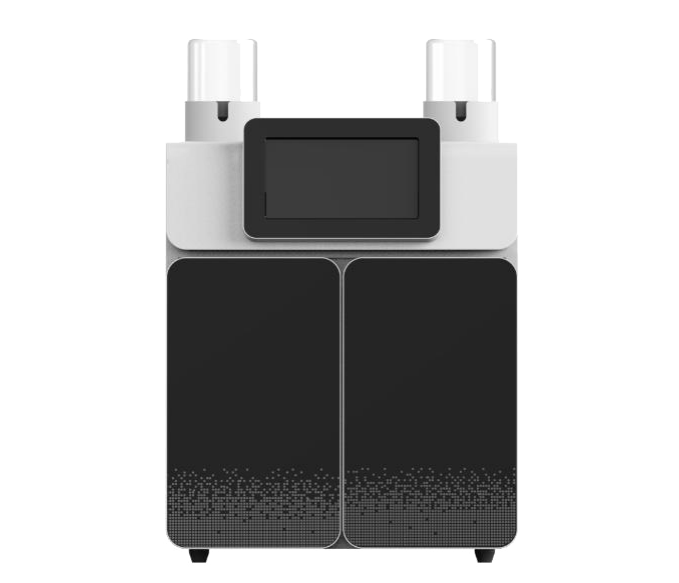
This is the latest integrated ion chromatograph with dual anion and cation channels
4 models
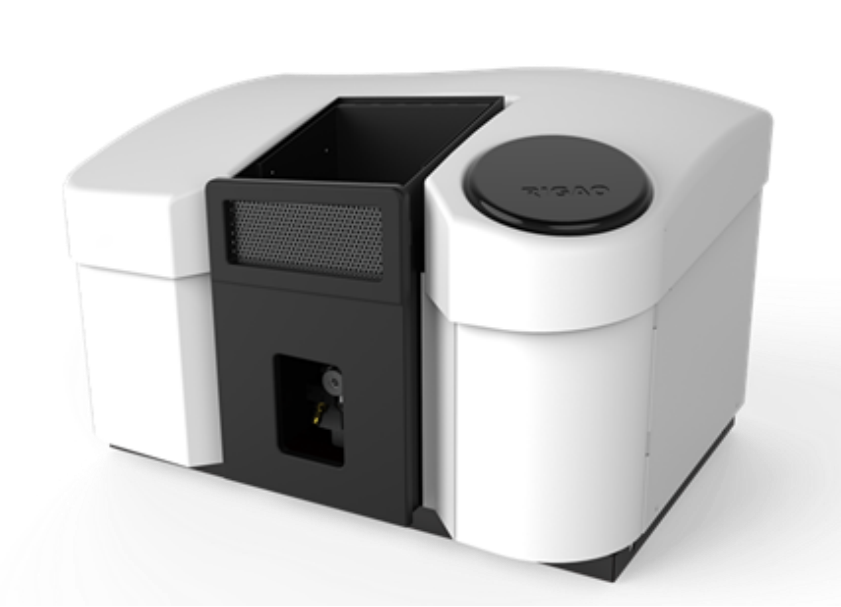
Excellent total reflection optical system ensures excellent signal-to-noise ratio of the instrument.
It removes particles, not dissolved interference, and it can remove part of the analyte with them. Filtration is a preparation decision that has to be documented — pore size, material and whether the first portion is discarded — rather than a way of cleaning up a difficult matrix.
On the first sample of a new source, after a method or reagent change, and on any sample whose spike recovery falls outside the acceptance window. Using it on every sample is accurate and slow; using it never is fast and unverifiable.
It helps with baseline drift and with samples that are optically dense, which is common in wastewater. It does not correct chemical interference — that is a preparation and calibration question, and no optical design replaces a spike recovery check.
Application note
Which instrument groups a drinking-water laboratory actually needs, in what order to buy them, and where the routine…
Application note
Which parameters a drinking-water laboratory must map before comparing instruments, and why the reporting range decides the bench…
Application note
An international buying brief for a water laboratory that needs a core platform now and documented expansion slots…
Let’s talk about your application
Send the sample, the concentration range and the reference method. We will confirm the instrument and the accessories.