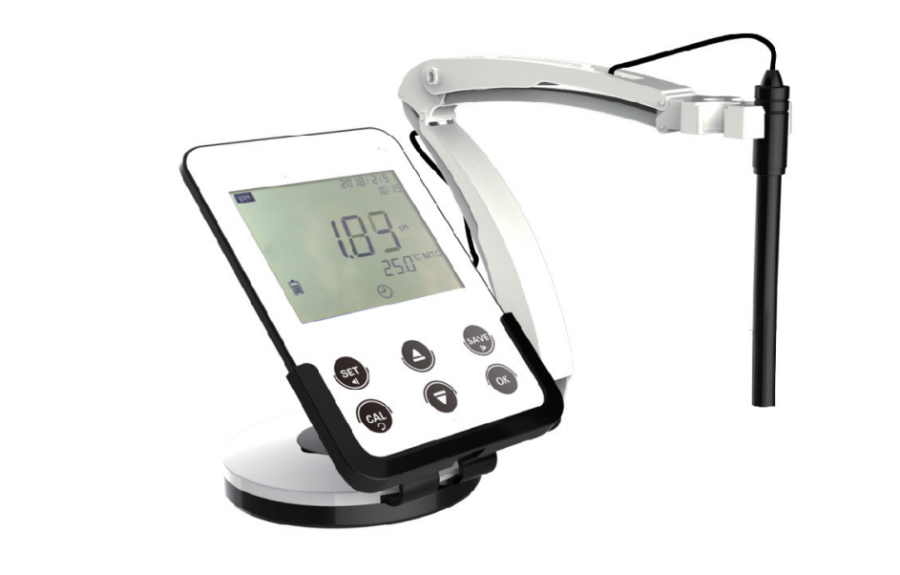
4 models
P9 Series pH/Conductivity/DO Meters
5-inch LCD screen with 150° viewing angle for clear reading out of 5 meters.
- Other
- Display 5-Inch white backlit LCD s…
- Working Condition
- Environment Temp. 5 ~ 35 ℃; Enviro…

Application note · Water & Environment
Which instrument groups a drinking-water laboratory actually needs, in what order to buy them, and where the routine workflow loses accuracy.
The short answer
Drinking-water testing is one of the few laboratory workflows where the parameter list is decided for you. The regulator defines what must be reported, the method defines how, and the laboratory’s job is to build a bench that produces those results repeatably. That makes instrument selection a sequencing exercise rather than a shopping exercise.
Before comparing instruments, write two columns: the parameters you must report, and the concentration range you must report them at. Almost every instrument decision follows from those two columns. Two laboratories with the same water source can end up with very different benches because one reports a single chloride value and the other separates six anions.
A useful test: if the report distinguishes between nitrate and sulphate, you need separation. If it only reports a sum such as hardness or alkalinity, titration is enough.
pH, conductivity, dissolved oxygen and turbidity are measured on almost every sample and need no preparation. They are also the measurements most likely to be silently wrong, because a dirty electrode or a scratched turbidity cell produces a plausible number. This group deserves the most attention to routine care, not the most money.
A multi-parameter benchtop meter plus one turbidity meter covers the group. If sampling happens in the field, a portable set is a separate decision: the field value and the laboratory value are different measurements and should be reported as such.
COD, ammonia, total phosphorus and total nitrogen share a workflow: digest, cool, dilute, read. The reading instrument can be a dedicated COD analyser or a spectrophotometer, but the digestion block is what constrains throughput. A laboratory that owns one block and one reader for four parameters will queue, so the batch size matters as much as the wavelength range.
| Parameter | Preparation | Reading | Typical working range |
|---|---|---|---|
| COD | Digestion with the reagent set | Colorimetric, dedicated analyser | 5–1500 mg/L after dilution |
| Ammonia | Distillation or direct colorimetry | Spectrophotometer | 0.01–10 mg/L |
| Total phosphorus | Digestion to phosphate | Spectrophotometer | 0.01–10 mg/L |
| Total nitrogen | Digestion to nitrate | Spectrophotometer | 0.1–50 mg/L |
Ion chromatography answers the question titration cannot: how much of each anion. It also brings infrastructure — eluent preparation, high-purity water, column care and a longer start-up routine. Laboratories usually add it when the anion workload is steady enough that outsourcing has become the bottleneck.
Trace metals at µg/L levels need atomic absorption. Flame covers the mg/L to sub-mg/L range and is the simpler routine; the graphite furnace reaches lower and demands more operator skill and more method work. Decide on the reporting limit, not on the ambition of the laboratory.
Three failures account for most out-of-control results: samples held longer than the method allows, digestion recovery treated as an assumption rather than a check, and a calibration range that does not bracket the sample. None of them is fixed by a better detector, and all of them are fixed by writing the workflow down.
The configuration described above, with the full specification of each model.
4 models
5-inch LCD screen with 150° viewing angle for clear reading out of 5 meters.
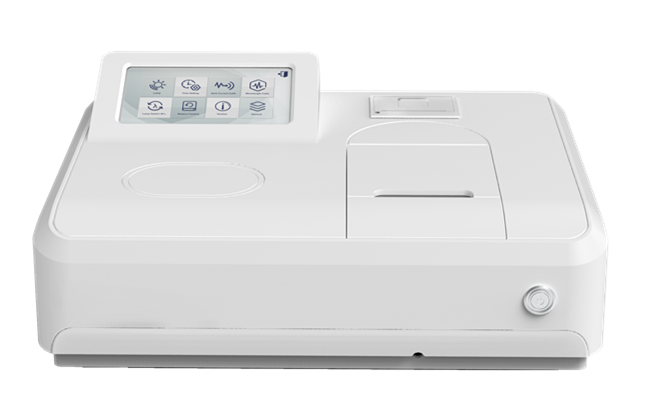
COD Series
7 inch high-resolution touchscreen with friendly GUI.
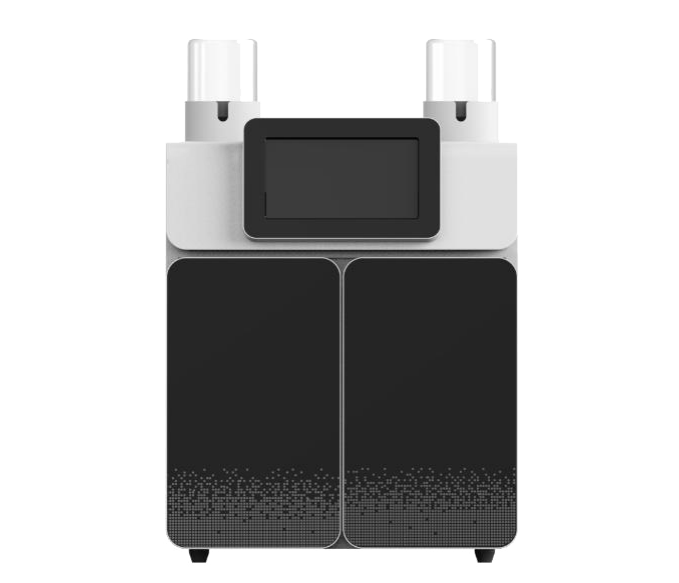
IC Series
This is the latest integrated ion chromatograph with dual anion and cation channels
Three: a multi-parameter meter for pH, conductivity and dissolved oxygen; a turbidity meter; and a spectrophotometer or colorimeter with a digestion block for COD. That set covers the measurements most small laboratories report daily.
Yes, and many laboratories do at the start. The trade-off is turnaround time and the cost per sample; outsourcing makes sense until the anion workload is steady enough to justify the bench space and the water system.
Not if the meter supports a DO electrode. Multi-parameter instruments switch between electrodes, which keeps one calibration routine and one bench position.
Application note
Which parameters a drinking-water laboratory must map before comparing instruments, and why the reporting range decides the bench…
Application note
How surface water, groundwater and wastewater change preparation, calibration and quality control — and where matrix effects are…
Application note
An international buying brief for a water laboratory that needs a core platform now and documented expansion slots…
Let’s talk about your application
Send the sample, the concentration range and the reference method. We will confirm the instrument and the accessories.