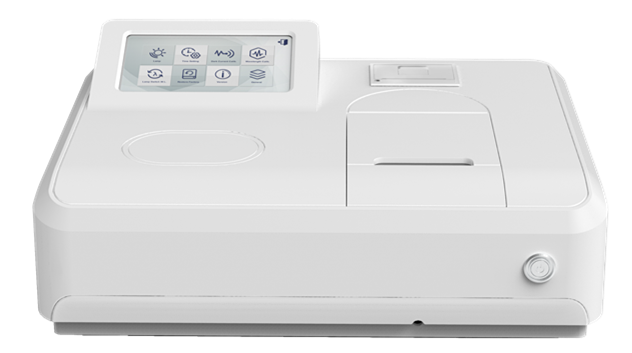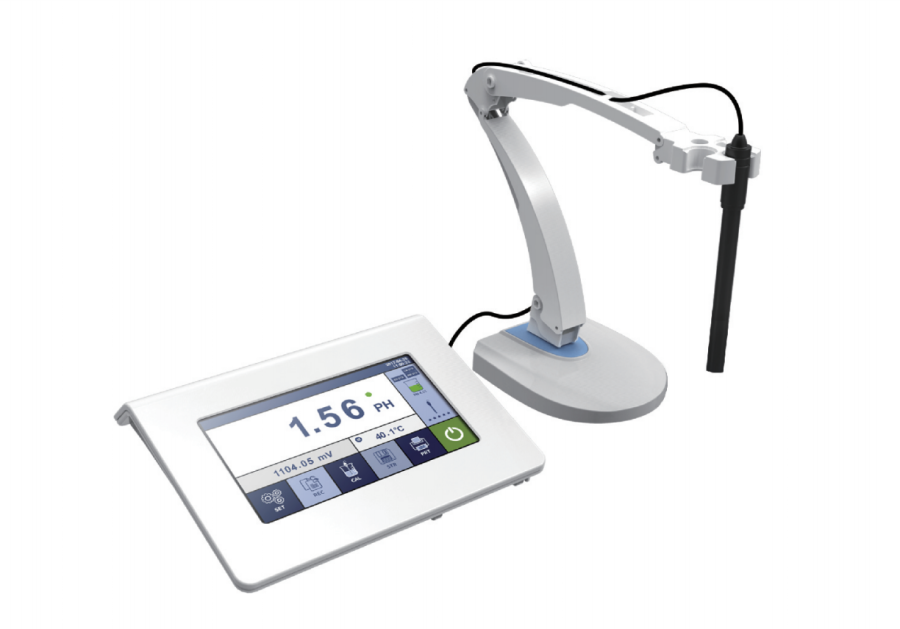
9 models
P8 Series pH/Conductivity/DO/Ion Meters
7-inch colored capacitive touchscreen with high resolution (1024*600) and high sensitivity.
- mV
- -1999.9mV ~ 0 ~ 1999.9mV; 1 mV; ±0.1% FS
- Temp.
- (-10 ~ 110)℃; 0.1℃; ±0.5℃

Application note · Water & Environment
Which parameters a drinking-water laboratory must map before comparing instruments, and why the reporting range decides the bench more than the brand does.
The short answer
A drinking-water laboratory is unusual among analytical laboratories in one respect: the parameter list is not chosen by the laboratory. It is defined by the reporting obligation, and the method is usually named as well. What remains open is the bench — which instrument groups, in which order, at what capacity.
That makes screening a mapping exercise rather than a shopping exercise. Before a single model is compared, the laboratory should be able to describe each parameter as a row: what it is, what range it must be reported over, how the sample is taken and preserved, and how long it may wait before analysis.
Write one row per reported parameter and fill four columns: unit, reporting range, preparation and holding time. The exercise takes an afternoon and settles most of the instrument question, because each column removes options.
Reporting range is the column most often left vague. “Chloride” is not a range. Reporting chloride at 5–250 mg/L is a range, and it points to titration. Reporting six individual anions from µg/L to mg/L points to separation. The same water and the same parameter name produce two different benches.
Almost every drinking-water report can be covered by four instrument groups. They differ less in the detector than in what happens to the sample before the detector sees it.
| Group | Parameters | Preparation | Typical platform |
|---|---|---|---|
| Electrochemistry | pH, conductivity, dissolved oxygen, turbidity | None, measured as received | Benchtop multi-parameter meter, turbidity meter |
| Digestion and colorimetry | COD, ammonia, total phosphorus, total nitrogen | Digest, cool, dilute | Digestion block plus colorimeter or spectrophotometer |
| Separation | Individual anions and cations | Filter, sometimes dilute | Ion chromatograph with eluent and pure water supply |
| Elemental | Trace metals | Preserve, digest, dilute | Atomic absorption, flame or furnace |
Instrument specifications quote detection limits measured in clean water. A laboratory reports limits in its own matrix, after its own preparation. The two numbers are never the same, and the difference is where selection goes wrong.
A practical rule: the required reporting limit should sit at least three to five times above the instrument’s published detection limit, with the preparation loss included. If the margin is thinner than that, the laboratory will spend its first year re-running samples instead of reporting them.
Holding time and preservation decide throughput as much as sample count does. A parameter that must be reported within a short window cannot be batched with everything else, and a bench designed around large batches will queue at exactly the wrong moment. Count how many samples arrive per day, then ask how many of them share the same preparation.
This is also where the balance and the pure-water supply enter the decision. Neither appears on a parameter list, and both sit upstream of every result that does.
The brief that produces a useful quotation has five parts: the parameter list with ranges, the daily and peak sample count, the preparation the method requires, the data and records the laboratory must keep, and the site conditions — voltage, water quality, bench space and ventilation. Send those five and the reply becomes a configuration rather than a catalogue page.
Three failures repeat. The first is planning around today’s parameter list when the obligation is known to expand. The second is buying capacity for the annual peak and paying for it every day. The third is treating the balance and the water system as accessories: in a trace-metals workflow both decide the result before the spectrometer does.
The configuration described above, with the full specification of each model.
9 models
7-inch colored capacitive touchscreen with high resolution (1024*600) and high sensitivity.
BT Series
7 inch high-resolution touchscreen with friendly GUI.
COD Series
7 inch high-resolution touchscreen with friendly GUI.
Not necessarily. If the two anions are reported as individual values at mg/L levels, titration or a selective electrode can cover them with far less infrastructure. Ion chromatography earns its place when the list grows, when the levels drop, or when the report has to distinguish several anions in one run.
Yes, provided the wavelength range and cell path suit the methods and a digestion block is available for the batch. A dedicated COD analyser is faster on that single parameter; a spectrophotometer covers the wider list. Many small laboratories start with the spectrophotometer and add the analyser when the COD count justifies it.
Plan the workflow rather than the instrument: digestion block, cooling area, balance, water supply and a clear sample-handling zone. For a small laboratory that usually means two to three metres of bench, of which the instruments themselves occupy less than half.
Application note
Which instrument groups a drinking-water laboratory actually needs, in what order to buy them, and where the routine…
Application note
How surface water, groundwater and wastewater change preparation, calibration and quality control — and where matrix effects are…
Application note
An international buying brief for a water laboratory that needs a core platform now and documented expansion slots…
Let’s talk about your application
Send the sample, the concentration range and the reference method. We will confirm the instrument and the accessories.