COD Series
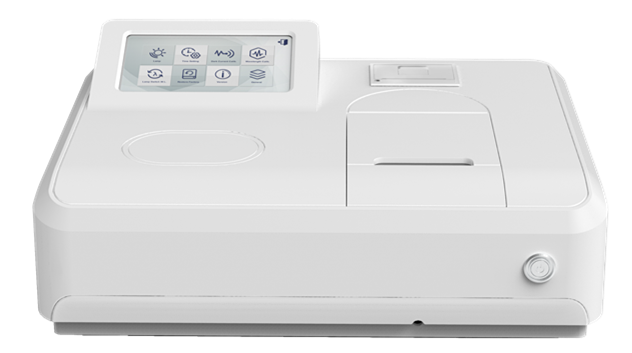
COD Analyzer B-COD
7 inch high-resolution touchscreen with friendly GUI.
- Measurement Method
- Fast digestion spectrophotometry
- Measuring Range
- 10-10000mg/L
- Accuracy
- ≤5%

Application note · Water & Environment
An international buying brief for a water laboratory that needs a core platform now and documented expansion slots for later — including the site conditions that decide whether delivery becomes operation.
The short answer
An export laboratory project tends to fail in the same three places regardless of the destination: the electrical supply is assumed rather than confirmed, the water and gas services are planned after the instrument is chosen, and operator training is treated as an optional line item. The instrument itself is rarely the problem.
The brief that avoids this treats the laboratory as a system with a core and a set of expansion slots. The core covers what must be reported from the first day. The slots are decided now and filled later, when the workload and the operator capacity justify them.
Every national framework defines its own list, its own units and its own limits, and importing a specification from another country is the most reliable way to buy the wrong configuration. Write the local list, mark which parameters are reported daily, which weekly, and which only on complaint. The daily list is the core. Everything else is a slot with a date attached.
| Layer | Content | Why it sits in this layer |
|---|---|---|
| Core | Multi-parameter meter, turbidity meter, balance, spectrophotometer or colorimeter with digestion | Covers daily indicators and most nutrient parameters, and needs no specialist infrastructure |
| Slot 1 | Ion chromatograph | Needs pure water, eluent preparation and a trained operator — add when the anion workload is steady |
| Slot 2 | Atomic absorption | Needs gas supply, ventilation and method work — add when trace metals are reported |
| Slot 3 | Automated sampling or a data system | Adds throughput and record integrity — add when sample count or audit pressure grows |
Four site conditions decide whether a delivered instrument becomes a working instrument: the electrical standard and its stability, the purity and pressure of the water supply, the ventilation and gas routing, and the ambient temperature of the room. Each is cheaper to plan than to retrofit, and none of them appears on a product datasheet.
Add language to that list — interface, manual and training material. A laboratory that has to translate a menu while learning a method loses weeks it did not budget for.
Ask what the instrument produces and in what format. A result that cannot be exported into the laboratory’s record system becomes a transcription step, and a transcription step becomes a transcription error. Specify the export format, the report layout, the user roles and whether the instrument keeps an audit trail.
Service is a configuration item, not an after-sales promise. Ask where the nearest service point is, what the response time is measured from, which spare parts are recommended as on-site stock, and who performs installation and the first calibration. In an export project the answer often decides between two otherwise equivalent models.
Country and site conditions, the parameter list with ranges, daily and peak sample count, the services available, the operator profile, the data and records requirement, and the service expectation. With those seven items a supplier can quote a configuration instead of a product.
The configuration described above, with the full specification of each model.
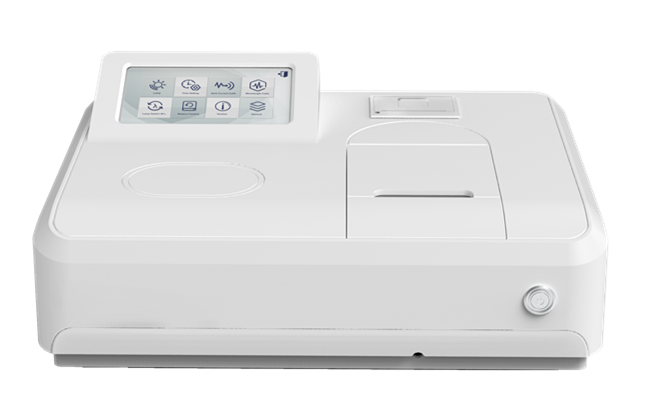
COD Series
7 inch high-resolution touchscreen with friendly GUI.
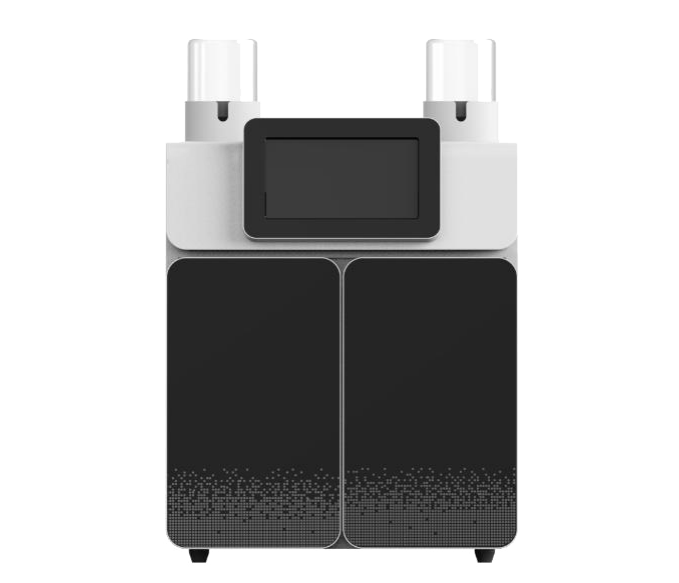
IC Series
This is the latest integrated ion chromatograph with dual anion and cation channels
Only if individual anions are on the reporting list from the first day. Otherwise the instrument arrives before the water system, the trained operator and the sample load that justify it, and it sits idle while consumables age.
The site voltage and frequency, whether the supply is stable or generator-backed, the plug type in use, and whether the laboratory has a dedicated circuit. Instruments that assume a stable supply behave differently on a generator.
Ask for the interface language and the manual in the operating language, and request that the installation visit include method training rather than installation alone. A translated menu is not the same as a trained operator.
Application note
Which instrument groups a drinking-water laboratory actually needs, in what order to buy them, and where the routine…
Application note
Which parameters a drinking-water laboratory must map before comparing instruments, and why the reporting range decides the bench…
Application note
How surface water, groundwater and wastewater change preparation, calibration and quality control — and where matrix effects are…
Let’s talk about your application
Send the sample, the concentration range and the reference method. We will confirm the instrument and the accessories.